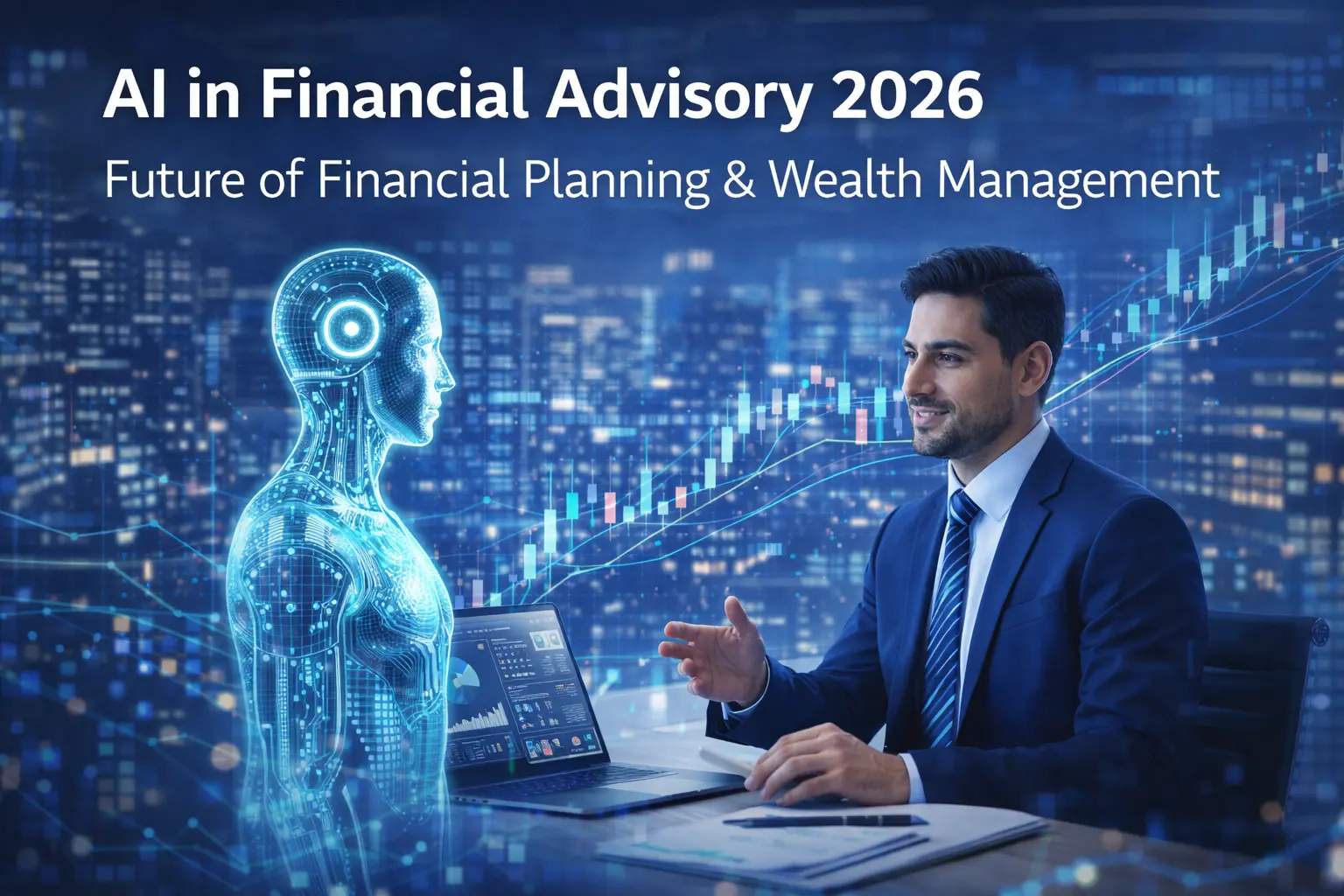
The financial services industry is evolving rapidly. In 2026, Artificial Intelligence (AI) is no longer a futuristic concept — it is reshaping how every financial advisor, financial consultant, and investment advisor delivers value to clients.
From predictive analytics to automated portfolio insights, AI is redefining how businesses approach financial planning, investment management, and long-term wealth management strategies.
But here’s the key question:
Is AI replacing advisors — or empowering them?
The Rise of AI in Financial Planning
Modern clients expect faster responses, data-driven insights, and personalized strategies. AI-powered systems now assist firms in:
- Risk profiling and behavioral analysis
- Real-time portfolio performance tracking
- Market trend forecasting
- Automated financial reporting
- Smart asset allocation modeling
For firms offering professional financial services, integrating AI improves both efficiency and accuracy. However, technology alone cannot replace human judgment — it enhances it.
How AI Strengthens Investment Advisory Services
In today’s volatile global markets, informed decisions are everything. AI tools help investment advisor teams by:
- Identifying hidden market correlations
- Monitoring macroeconomic indicators
- Detecting early risk signals
- Optimizing portfolio diversification
When combined with expert insight, these tools elevate investment management strategies to a more strategic level.
The result?
Better decision-making, reduced risk exposure, and improved client confidence.
Wealth Management in the Age of Smart Automation
Clients today demand more than static financial plans. They want dynamic strategies that evolve with their life goals.
AI-driven analytics allow wealth management professionals to:
- Track goal progress in real-time
- Adjust strategies based on life events
- Forecast long-term wealth growth scenarios
- Improve tax-efficiency modeling
Yet, despite automation, emotional intelligence remains critical. A trusted financial advisor still plays a central role in understanding client aspirations, risk tolerance, and long-term vision.
Corporate Finance and AI Integration
For organizations, AI is transforming corporate finance operations through:
- Predictive cash flow forecasting
- Automated budgeting systems
- Fraud detection algorithms
- Performance benchmarking tools
Companies leveraging AI within their financial planning frameworks gain a competitive advantage in cost management and strategic expansion.
Why Human Advisory Still Matters
While AI enhances technical analysis, strategic thinking and ethical decision-making remain human strengths.
An experienced financial consultant provides:
- Strategic interpretation of complex data
- Customized client-focused solutions
- Risk communication and education
- Long-term relationship building
Technology supports the process — but trusted advisory builds confidence.
The Competitive Edge for Financial Firms in 2026
Firms that successfully integrate AI into their financial services offerings are:
- More efficient
- More accurate
- More scalable
- More client-focused
However, success requires structured training, regulatory awareness, and strategic implementation — not blind automation.
This is where expert guidance and corporate advisory become essential.
Final Thoughts: The Future Is Hybrid
The future of finance is not human vs. machine — it is human + machine.
AI enhances analytics.
Advisors provide wisdom.
Technology improves speed.
Professionals deliver trust.
Organizations and advisory firms that embrace this hybrid approach will lead the next era of investment management, financial planning, and strategic wealth management.