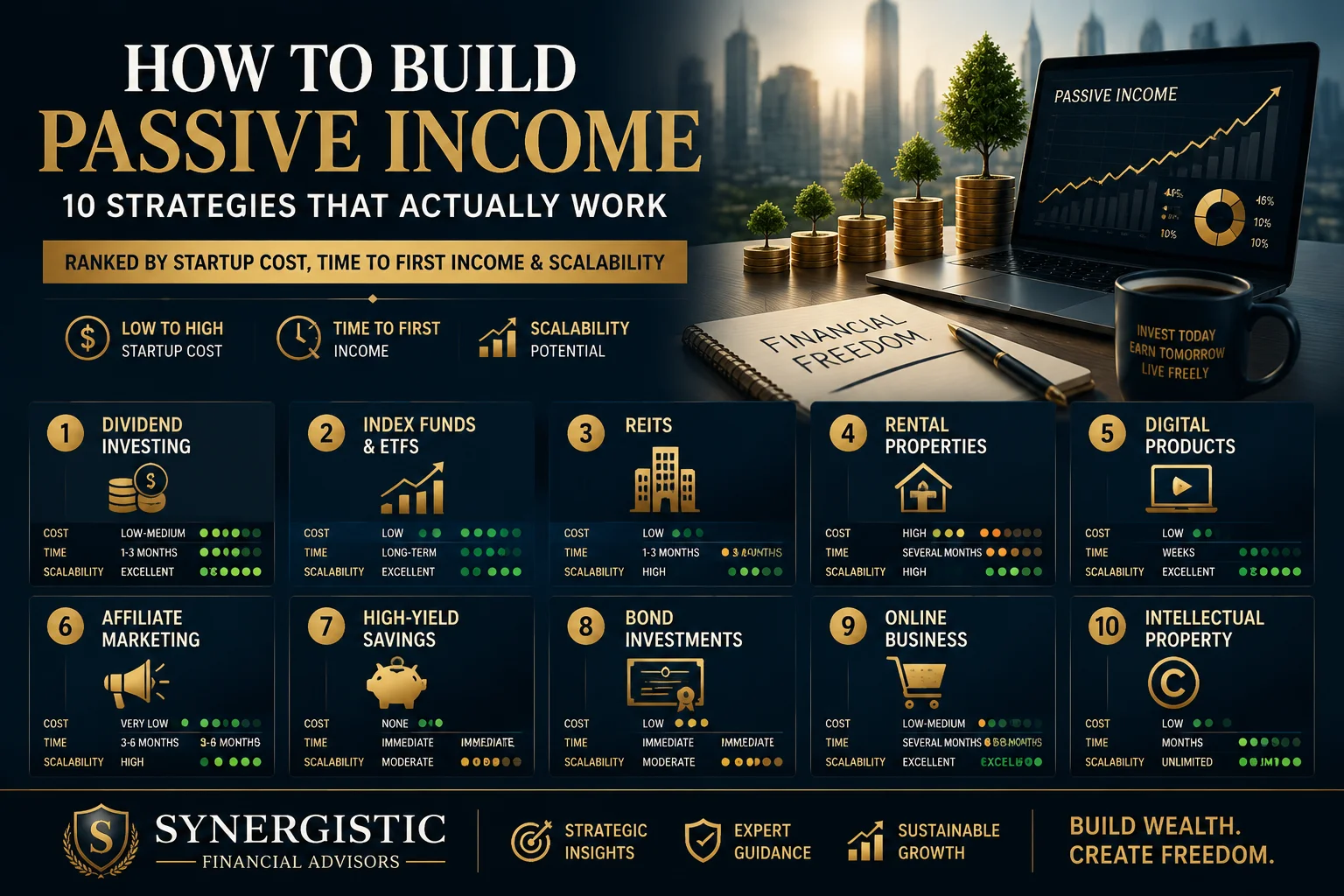
Imagine earning money while you’re sleeping, traveling, or spending time with your family. That’s the power of passive income. While no passive income stream is truly “set it and forget it,” the right investments and financial strategies can create reliable cash flow that grows over time with relatively little ongoing effort.
In 2026, rising inflation, higher living costs, and economic uncertainty have made passive income more valuable than ever. Whether your goal is financial independence, early retirement, or simply earning extra monthly income, building multiple passive income streams can significantly improve your financial security.
The key is choosing strategies that match your budget, risk tolerance, and long-term goals. In this guide, we’ll rank 10 passive income ideas by startup cost, time to first income, and scalability, while also showing how smart investment management and professional financial planning can help maximize your returns.
What Is Passive Income?
Passive income is money earned with minimal ongoing effort after the initial setup. Unlike a traditional salary, passive income continues to generate cash flow even when you’re not actively working every day.
Examples include:
- Dividend-paying investments
- Rental properties
- Digital products
- REITs
- Online businesses
- Royalties
- High-yield savings accounts
The goal isn’t to stop working overnight—it’s to gradually build income streams that reduce your dependence on a single paycheck.
How We Ranked These Strategies
Each passive income strategy is evaluated using three factors:
| Strategy | Startup Cost | Time to First Income | Scalability |
|---|---|---|---|
| Low | Under $1,000 | Days or Weeks | Easy to Scale |
| Medium | $1,000–$20,000 | Months | Moderate |
| High | $20,000+ | Several Months | Very High |
1. Dividend Investing ⭐⭐⭐⭐⭐
Startup Cost: Low to Medium
Time to Income: 1–3 Months
Scalability: Excellent
Dividend-paying companies distribute a portion of their profits to shareholders, creating one of the most reliable passive income streams.
Benefits include:
- Quarterly income
- Long-term capital growth
- Dividend reinvestment opportunities
- Inflation protection
Many investors build diversified dividend portfolios as part of a broader wealth management strategy.
2. Index Funds & ETFs ⭐⭐⭐⭐⭐
Startup Cost: Low
Time to Income: Long-Term
Scalability: Excellent
Index funds remain one of the best investments for beginners.
Advantages include:
- Low fees
- Broad diversification
- Professional management
- Long-term growth potential
Regular monthly investing through dollar-cost averaging can steadily build wealth over time.
3. Real Estate Investment Trusts (REITs)
Startup Cost: Low
Time to Income: 1–3 Months
Scalability: High
REITs allow investors to earn income from commercial real estate without owning physical property.
Benefits include:
- Monthly or quarterly dividends
- Diversification
- Liquidity
- Professional property management
4. Rental Property Investing
Startup Cost: High
Time to Income: Several Months
Scalability: High
Rental real estate can provide:
- Monthly rental income
- Property appreciation
- Tax benefits
- Inflation protection
However, it also requires larger capital, financing, and occasional property management.
5. Digital Products
Startup Cost: Low
Time to Income: Weeks
Scalability: Excellent
Examples include:
- Online courses
- E-books
- Financial templates
- Business spreadsheets
- Investment calculators
Once created, digital products can generate recurring sales with minimal maintenance.
6. Affiliate Marketing
Startup Cost: Very Low
Time to Income: 3–6 Months
Scalability: High
Website owners and content creators earn commissions by recommending products or services.
Success depends on:
- High-quality content
- SEO
- Consistent traffic
- Audience trust
7. High-Yield Savings Accounts & Cash Management
Startup Cost: None
Time to Income: Immediate
Scalability: Moderate
Although returns are generally lower than investing, high-yield savings accounts provide:
- Safety
- Liquidity
- Predictable interest income
They are ideal for emergency funds and short-term savings.
8. Bond Investments
Startup Cost: Low
Time to Income: Immediate
Scalability: Moderate
Government and corporate bonds offer regular interest payments and can reduce overall portfolio volatility.
They often play an important role in balanced investment management strategies.
9. Build an Online Business
Startup Cost: Low to Medium
Time to Income: Several Months
Scalability: Excellent
Examples include:
- Niche websites
- Membership platforms
- Subscription newsletters
- SaaS businesses
While these require effort upfront, successful businesses can generate recurring income for years.
10. Create Intellectual Property
Startup Cost: Low
Time to Income: Months
Scalability: Unlimited
Examples include:
- Books
- Music
- Photography
- Software
- Mobile apps
- Licensing
Royalties can continue generating income long after the original work is created.
Which Passive Income Strategy Is Best?
| Goal | Best Strategy |
|---|---|
| Beginner | Index Funds |
| Monthly Income | Dividend Stocks |
| Long-Term Wealth | Diversified Investment Portfolio |
| Low Risk | High-Yield Savings + Bonds |
| High Growth | Online Business |
| Property Exposure | REITs |
| High Scalability | Digital Products |
Many investors combine several strategies rather than relying on just one source of passive income.
Build Multiple Income Streams
One of the best ways to improve financial resilience is diversification.
For example:
- Dividend stocks
- REITs
- Rental property
- Digital products
- Online business
- Bond income
Diversifying income sources helps reduce reliance on any single investment or market.
The Role of Investment Management
Generating passive income isn’t only about choosing investments—it also requires ongoing portfolio oversight.
Professional investment management helps investors:
- Allocate assets effectively
- Diversify across sectors
- Manage risk
- Rebalance portfolios
- Optimize taxes
- Align investments with long-term financial goals
This disciplined approach can improve the sustainability of passive income over time.
Common Passive Income Mistakes
Avoid these common errors:
- Chasing unrealistic returns
- Ignoring diversification
- Investing without research
- Forgetting taxes
- Underestimating risk
- Relying on one income source
- Expecting overnight success
- Not reviewing investments regularly
Patience and consistency are often more valuable than pursuing quick profits.
How a Financial Advisor Can Help
A qualified financial advisor can help you build a passive income strategy tailored to your objectives.
An experienced investment advisor can assist with:
- Portfolio construction
- Dividend investing
- Retirement income planning
- Real estate allocation
- Tax-efficient investing
- Risk management
- Estate planning
- Long-term financial planning
Working with an independent financial advisor can help ensure your passive income strategy remains aligned with your changing financial needs.
Passive Income Action Plan
Use this checklist to get started:
✅ Define your financial goals
✅ Build an emergency fund
✅ Pay off high-interest debt
✅ Start investing consistently
✅ Diversify your income sources
✅ Reinvest earnings where appropriate
✅ Review your portfolio annually
✅ Optimize for taxes
✅ Increase contributions as income grows
✅ Seek professional financial advice when needed
Final Thoughts
Building passive income is a long-term process, not an overnight achievement. The most successful investors typically combine multiple income streams—such as dividend stocks, index funds, REITs, digital products, and real estate—while maintaining a disciplined approach to financial planning and investment management.
Start with the strategies that fit your current budget and experience, then expand as your wealth grows. Over time, consistent investing, diversification, and professional guidance can transform passive income from a side benefit into a meaningful source of long-term financial security.