Life is unpredictable. A job loss, medical emergency, unexpected home repair, or economic downturn can quickly disrupt your finances. That’s why every successful financial plan starts with one essential building block—an emergency fund.
In 2026, with persistent inflation, economic uncertainty, and changing employment trends, having an emergency fund is more important than ever. It provides financial security, reduces stress, and prevents you from relying on high-interest debt when unexpected expenses arise.
But one of the most common questions people ask is: How much emergency savings do I actually need?
The answer depends on your income, lifestyle, family size, employment stability, and financial goals. In this guide, we’ll explain how to calculate the right emergency fund, where to keep it, common mistakes to avoid, and how a financial advisor, financial planner, or investment advisor can help you build a stronger financial foundation.
What Is an Emergency Fund?
An emergency fund is money set aside specifically for unexpected financial emergencies. It is not meant for vacations, shopping, or planned expenses. Instead, it acts as a financial safety net that protects you from borrowing money or selling investments during difficult times.
Typical emergencies include:
- Job loss or reduced income
- Medical expenses
- Car repairs
- Home maintenance
- Family emergencies
- Unexpected travel
- Major appliance replacement
- Business cash flow disruptions
Having accessible savings allows you to handle these situations without jeopardizing your long-term financial goals.
Why an Emergency Fund Is Essential in 2026
Economic conditions continue to evolve, making financial preparedness increasingly important.
An emergency fund helps you:
- Reduce financial stress
- Avoid credit card debt
- Protect long-term investments
- Maintain your lifestyle during income disruptions
- Cover unexpected medical costs
- Prevent early retirement withdrawals
- Improve overall financial confidence
Without emergency savings, even a minor financial setback can create long-term financial challenges.
How Much Emergency Savings Do You Really Need?
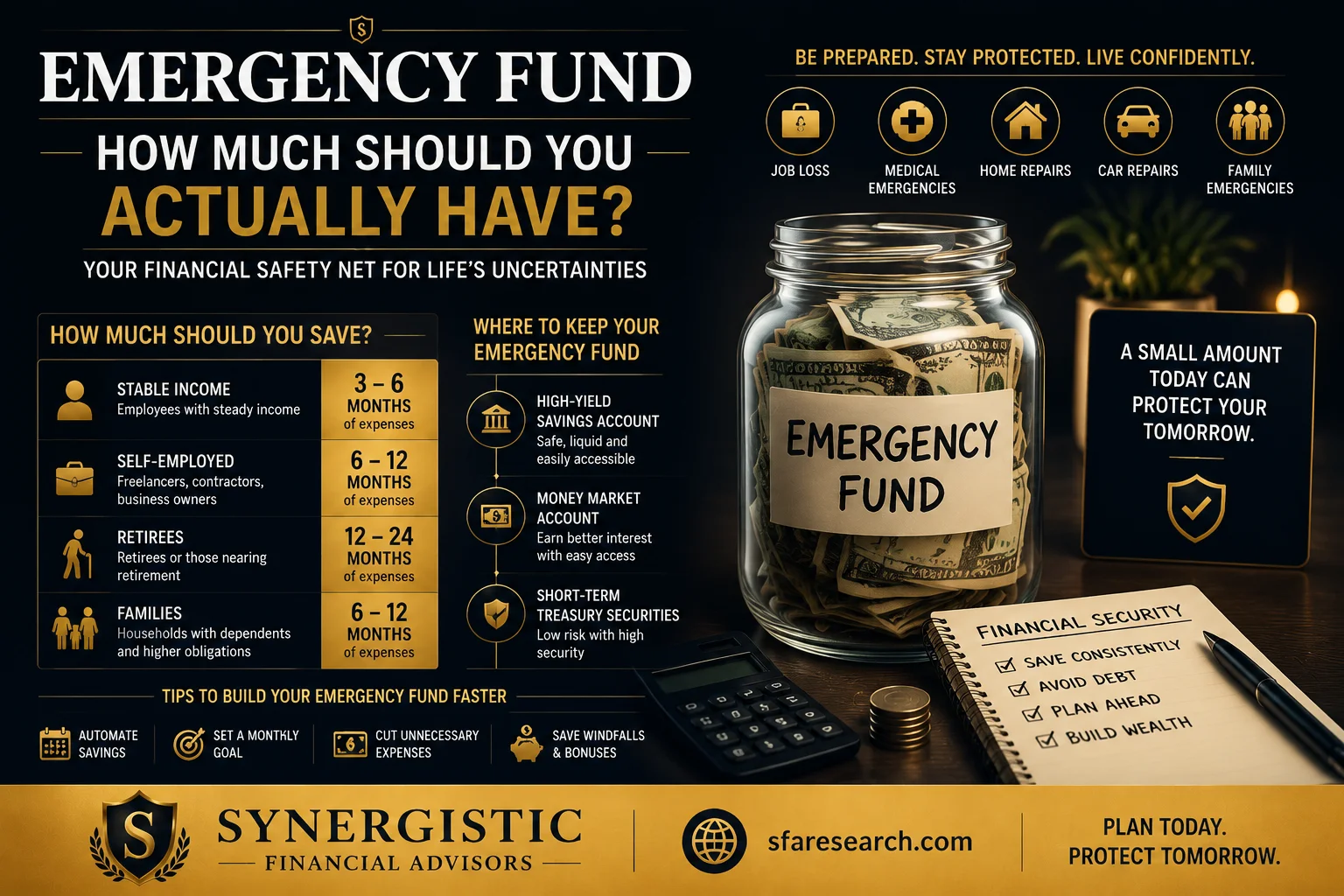
There isn’t a universal number that fits everyone. Financial professionals generally recommend saving between three and six months of essential living expenses, but your ideal amount depends on your personal circumstances.
If You Have a Stable Salary
Employees with consistent income and strong job security can often aim for:
3–6 months of essential expenses
Example:
Monthly expenses = $4,000
Emergency fund target:
- Minimum: $12,000
- Ideal: $24,000
If You’re Self-Employed or a Business Owner
Income fluctuations increase financial risk.
A recommended emergency fund is:
6–12 months of expenses
This provides additional protection during slower business periods or economic downturns.
If You’re Retired
Retirees should maintain enough liquid savings to avoid selling investments during market declines.
Many financial professionals recommend:
12–24 months of planned withdrawals
This strategy helps preserve investment portfolios during volatile markets.
If You Have Dependents
Families with children typically require larger emergency reserves because household expenses are higher and unexpected costs are more common.
Calculate Your Emergency Fund
Start by identifying your essential monthly expenses.
Include:
- Housing payments
- Utilities
- Groceries
- Transportation
- Insurance premiums
- Loan payments
- Childcare
- Healthcare
- Internet and communication
- Basic household expenses
Multiply this amount by the number of months you wish to cover.
Example
Monthly essentials:
- Housing: $2,000
- Food: $700
- Transportation: $500
- Insurance: $400
- Utilities: $300
- Healthcare: $300
- Other essentials: $300
Total Monthly Expenses = $4,500
Emergency fund goals:
- 3 months = $13,500
- 6 months = $27,000
- 12 months = $54,000
Where Should You Keep Your Emergency Fund?
Your emergency savings should be safe, liquid, and easily accessible.
Common options include:
High-Yield Savings Accounts
These provide competitive interest rates while allowing quick access to funds.
Money Market Accounts
Money market accounts often combine liquidity with higher interest than standard savings accounts.
Short-Term Treasury Securities
Suitable for investors seeking additional security while maintaining liquidity.
Avoid keeping emergency funds in volatile investments such as stocks or cryptocurrencies, where values can fluctuate significantly.
How to Build Your Emergency Fund Faster
Saving a large amount may seem overwhelming, but consistency makes a significant difference.
Automate Your Savings
Set up automatic transfers immediately after each paycheck.
Even small monthly contributions accumulate over time.
Set a Monthly Goal
Treat savings like a recurring bill.
For example:
- $200 monthly
- $500 monthly
- $1,000 monthly
Consistency matters more than the starting amount.
Reduce Unnecessary Expenses
Review discretionary spending such as:
- Dining out
- Subscription services
- Impulse purchases
- Luxury shopping
Redirect those savings toward your emergency fund.
Save Windfalls
Consider depositing unexpected income such as:
- Bonuses
- Tax refunds
- Gifts
- Freelance income
- Investment gains
These can significantly accelerate your progress.
Common Emergency Fund Mistakes
Many people unknowingly weaken their financial safety net.
Investing Emergency Savings
Emergency funds should prioritize stability over high returns.
Investing these funds in volatile assets increases risk.
Spending the Fund on Non-Essentials
An emergency fund should only be used for genuine financial emergencies.
Avoid using it for vacations, gadgets, or discretionary purchases.
Saving Too Little
A few hundred dollars may help with minor repairs, but it may not provide sufficient protection against major emergencies.
Aim for a realistic long-term target.
Keeping Too Much Cash
While adequate emergency savings are essential, holding excessive idle cash may reduce long-term investment growth.
Once your emergency fund is complete, additional savings can often be directed toward investment management, retirement accounts, or diversified portfolios.
Emergency Fund vs. Investing
Many beginners wonder whether they should invest first or build emergency savings.
Generally, financial professionals recommend:
- Cover essential expenses.
- Build an emergency fund.
- Pay down high-interest debt.
- Begin long-term investing.
- Continue growing wealth through diversified investments.
Following this sequence helps reduce financial risk while supporting sustainable wealth creation.
How a Financial Advisor Can Help
Building an emergency fund is one component of a comprehensive financial strategy.
An experienced financial advisor can help you:
- Calculate the right emergency savings target
- Balance savings and investing
- Improve cash flow management
- Reduce unnecessary debt
- Develop long-term financial planning
- Optimize portfolio management
- Create tax-efficient strategies
- Prepare for retirement
Working with a professional financial consultant ensures your emergency savings support your broader financial goals without slowing long-term wealth creation.
Emergency Fund Checklist
Use this checklist to evaluate your readiness:
✅ Know your monthly essential expenses
✅ Set a realistic savings target
✅ Open a dedicated emergency savings account
✅ Automate monthly contributions
✅ Avoid using the fund for non-emergencies
✅ Review and adjust annually
✅ Increase savings after salary raises
✅ Rebuild the fund after withdrawals
Final Thoughts
An emergency fund is one of the most important components of successful financial planning. While investment returns and market performance often receive more attention, financial resilience begins with having enough cash to manage life’s unexpected challenges.
Whether you’re starting your career, raising a family, running a business, or preparing for retirement, maintaining an appropriate emergency fund can protect your finances, reduce stress, and keep your long-term goals on track. After building this foundation, you can confidently pursue wealth management, portfolio management, and long-term investing with greater peace of mind.
1. How much should my emergency fund be in 2026?
Most financial experts recommend saving 3–6 months of essential living expenses, while self-employed individuals and retirees may need 6–12 months or more.
2. Should I invest my emergency fund?
No. Emergency funds should remain in low-risk, liquid accounts so the money is readily available when needed.
3. Where is the best place to keep an emergency fund?
High-yield savings accounts, money market accounts, and other secure, easily accessible cash equivalents are common choices.
4. What qualifies as a financial emergency?
Unexpected events such as job loss, medical bills, major home or car repairs, or urgent family expenses generally qualify.
5. Can a financial advisor help me determine the right emergency fund?
Yes. A financial advisor can assess your income, expenses, goals, and risk profile to recommend an emergency savings strategy that fits your overall financial planning and wealth management objectives.