Introduction: A New Competitive Reality for the Automotive Industry
The global automotive industry is entering a major period of transformation. Electric vehicles, changing consumer expectations, technological innovation and international competition are reshaping how manufacturers operate and compete.
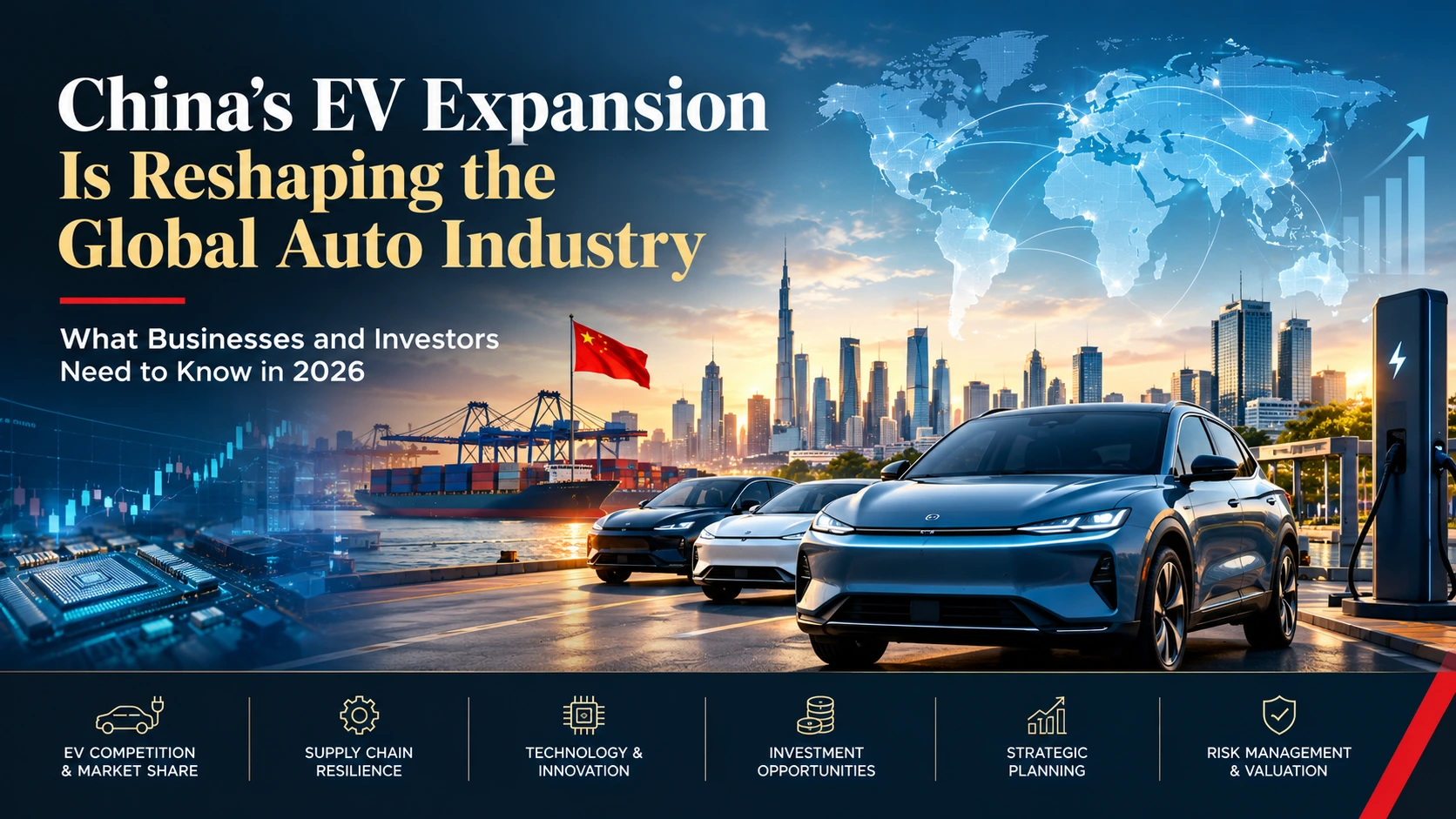
One of the most significant developments is the growing influence of Chinese automotive manufacturers in international markets. Companies such as BYD and Geely have strengthened their positions through competitive pricing, electric vehicle technology and software development.
This shift is creating new challenges for established automotive companies, particularly in Europe. Traditional manufacturers are now under pressure to improve efficiency, restructure operations and reconsider their long-term investment strategies.
A Reuters report published on October 30, 2026, highlighted this changing environment. Although several European automotive stocks recovered following quarterly earnings announcements, investors remain concerned about the industry’s long-term competitiveness and profitability.
The development offers an important lesson for businesses worldwide: companies must continuously reassess their competitive position, financial performance and investment priorities.
1. Chinese Automotive Manufacturers Are Changing Global Competition
Chinese automotive manufacturers have made substantial progress in electric vehicle development and international expansion.
According to Reuters, Chinese manufacturers had increased their share of the European automotive market to more than 10% by the middle of 2026, compared with a negligible presence in 2021.
Their competitive strengths include:
- Cost-efficient vehicle production.
- Expanding electric vehicle product ranges.
- Investment in battery technology.
- Integration of software and digital features.
- Competitive pricing strategies.
- International expansion and strategic partnerships.
This development is challenging established manufacturers that previously held stronger positions in several international markets.
The impact is not limited to vehicle sales. It also affects suppliers, battery manufacturers, technology companies, logistics providers and businesses connected to automotive production.
Business implication: Competitive advantage increasingly depends on production efficiency, innovation, pricing discipline and the ability to respond to changing customer demand.
2. European Automakers Are Reconsidering Their Business Strategies
European automotive companies are responding through restructuring, new product development and partnerships.
Reuters reported that Volkswagen, Stellantis and Renault have been working to restore investor confidence through different strategic initiatives.
Examples include:
- Volkswagen pursuing a major restructuring programme, including plans to reduce its workforce by around 100,000 positions and potentially close factories in Germany.
- Stellantis focusing on new vehicle models, brand strategy changes and partnerships with Chinese automotive companies.
- Renault working to strengthen its competitive position as market conditions evolve.
Stellantis shares rose approximately 15% in a single trading session following its third-quarter results, supported by investor confidence in its cost-reduction plans.
However, short-term improvements in share prices do not automatically guarantee long-term business recovery. Companies must demonstrate that restructuring can produce sustainable improvements in profitability and cash flow.
Business implication: Restructuring should be supported by measurable financial objectives, realistic implementation plans and continuous performance monitoring.
3. Why Cost Efficiency Is Becoming a Strategic Priority
Automotive manufacturers operate in a capital-intensive industry. Production facilities, research and development, technology, supply chains and workforce requirements demand significant investment.
When competition increases, companies may find it difficult to maintain profitability without reviewing their operating structures.
Businesses should evaluate:
- Manufacturing costs and production efficiency.
- Supply-chain reliability and supplier concentration.
- Factory utilisation and operating expenses.
- Inventory management and working capital.
- Research and development expenditure.
- Product profitability across different markets.
A company can generate substantial revenue while still facing financial pressure if production costs, financing expenses or capital requirements become difficult to manage.
For this reason, financial performance should be evaluated through more than sales growth alone. Operating margins, free cash flow, return on invested capital and debt levels are also important indicators.
4. Strategic Partnerships and Supply-Chain Decisions Matter More Than Ever
The changing automotive landscape demonstrates why international partnerships are becoming important business tools.
Manufacturers may seek partnerships to access technology, improve production efficiency, enter new markets or reduce development costs.
Potential areas of cooperation include:
- Battery manufacturing and supply.
- Electric vehicle platforms.
- Automotive software development.
- Research and development.
- Component manufacturing.
- Distribution and market expansion.
However, partnerships also introduce financial, operational and regulatory risks.
Before entering an agreement, businesses should examine the financial position of potential partners, contractual obligations, technology ownership, operational dependencies and expected returns.
A well-structured partnership should create measurable economic value rather than simply increase market presence.
5. What Should Investors Watch in the Automotive Sector?
The transformation of the automotive industry creates both opportunities and risks for investors.
A company operating in a growing industry is not automatically a good investment. Its valuation, profitability, financial position and ability to execute its strategy remain essential considerations.
Investors evaluating automotive businesses should pay attention to the following factors:
Revenue and market share: Is the company gaining customers and expanding into new markets?
Operating margins: Can it compete on price without damaging profitability?
Capital expenditure: Are investments in factories, batteries and technology generating acceptable returns?
Cash flow: Does the business generate sufficient cash to support operations and future investment?
Debt and liquidity: Can the company meet its financing obligations under challenging market conditions?
Competitive positioning: Does it have a sustainable advantage in technology, cost, distribution or customer experience?
Investors should also consider exposure to tariffs, regulatory changes, currency fluctuations and supply-chain disruptions.
These factors can influence business valuations and long-term investment performance.
6. New Business Opportunities Emerging From the EV Transition
While traditional manufacturers face competitive pressure, the transition also creates opportunities across related industries.
Some areas worth monitoring include:
- Battery production and recycling.
- Electric vehicle charging infrastructure.
- Automotive software and digital services.
- Semiconductor and component manufacturing.
- Supply-chain technology.
- Fleet electrification.
- Energy storage solutions.
- Specialist engineering and manufacturing services.
However, emerging industries can experience rapid changes in demand, competition and capital requirements. Businesses should assess commercial feasibility and financial sustainability before committing significant resources.
The strongest opportunities are not necessarily the fastest-growing segments. They are the areas where companies can build a sustainable competitive advantage and generate attractive long-term returns.
7. The Role of Financial Advisory in a Changing Business Environment
Developments in the automotive industry demonstrate why financial planning and strategic advisory are important for companies operating in competitive markets.
Businesses considering expansion, restructuring, partnerships or major investments need a clear understanding of their financial position and future requirements.
Professional financial advisory can support decisions involving:
- Business valuation and financial performance reviews.
- Corporate finance and capital structure planning.
- Investment evaluation and feasibility studies.
- Cash flow management and financial monitoring.
- Operational restructuring and performance improvement.
- Strategic planning and sector benchmarking.
- Risk assessment and investment research.
At Synergistic Financial Advisors (SFA), we provide financial advisory, corporate finance, portfolio management and analytical support to local and international clients.
Our services are designed to help businesses evaluate opportunities, understand financial risks and make informed strategic decisions.
Explore our services:
Conclusion: Adaptability Will Define the Next Generation of Business Leaders
The expansion of Chinese electric vehicle manufacturers is an important development in the global business environment. It demonstrates how technological innovation, cost competitiveness and international expansion can change the balance of an established industry.
For traditional manufacturers, the challenge is to modernise operations, improve financial efficiency and develop competitive products. For investors, the priority is to distinguish sustainable business performance from short-term market enthusiasm.
The broader lesson applies beyond automotive manufacturing: businesses that regularly evaluate their financial position, competitive strengths and investment decisions are better prepared to respond to market changes.
In an increasingly competitive global economy, strategic planning and disciplined financial management are essential foundations for sustainable growth.
Looking for professional financial advisory and corporate finance support?
Visit Synergistic Financial Advisors to explore financial advisory, corporate finance, portfolio management and investment research services.
Disclaimer: This article is intended for general informational and educational purposes only. It does not constitute investment, financial, legal or tax advice. Business and investment decisions should be based on individual circumstances and appropriate professional assessment.