Portfolio management

Global Economic Uncertainty in 2026 or Financial Advisor
Business Advisory, Financial Advisor, Financial Advisory Insights

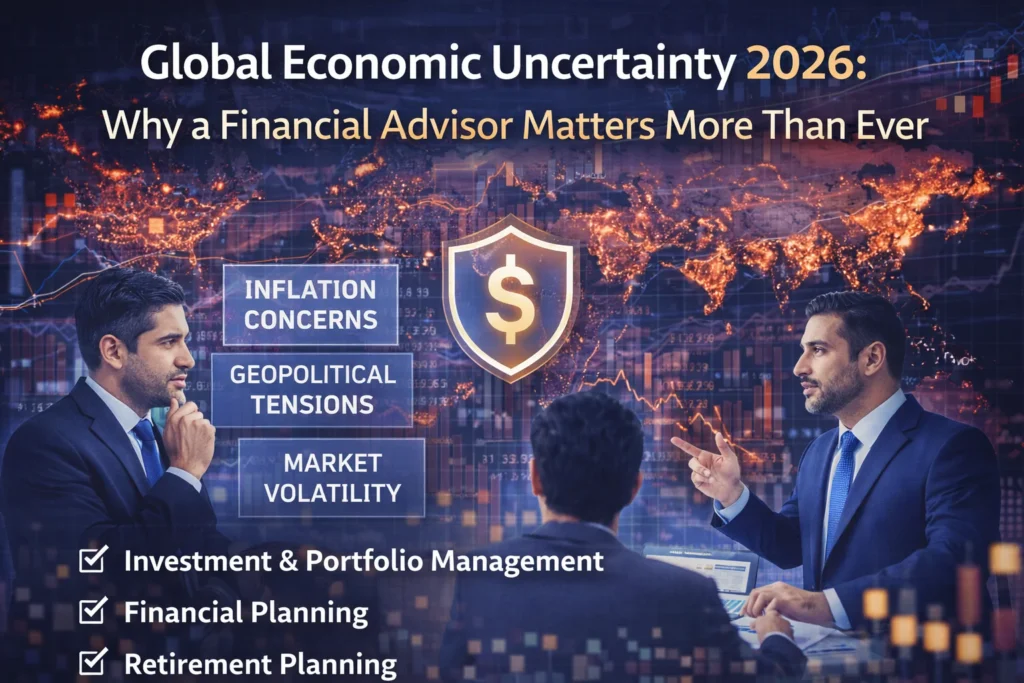
Global Economic Uncertainty in 2026: Why a Financial Advisor Is More Important Than Ever

The global economy in 2026 is still really uncertain. There are a lot of things that are affecting the money markets over the world. This includes things like countries not getting along energy prices going up and down people worrying about inflation and banks changing the rules about borrowing money. All of these things are making it hard for people to know what to do with their money. It is an idea to get help from a financial advisor or financial planner when things are this unsure. A lot of people are starting to realize that they need more than basic knowledge about money to make good decisions. They need someone who really knows what they are doing to help them. This is the way to really keep your money safe and make sure you have enough for the future. When big things happen in the world the money markets get upset.. If you have a good plan and you are smart about how you invest your money you can still do okay. You can even keep growing your money over time. The global economy is always changing and the global economy in 2026 is no exception. So people need to be smart and work with an advisor or financial planner to make good decisions, about the global economy and their money. How Global Economic Changes Affect Investments Economic uncertainty directly impacts investment markets. When inflation rises or interest rates change, financial markets often become volatile. Investors who lack professional guidance may react emotionally and make decisions that negatively affect their long-term financial goals. This is where an experienced investment advisor or independent financial advisor can make a major difference. Through professional portfolio management and structured financial management, advisors help clients maintain diversified investment strategies. Diversification allows investors to spread risk across multiple asset classes, which improves stability during uncertain market conditions. Professional wealth management strategies ensure that financial assets are not overly dependent on a single market or industry. Many global financial institutions now emphasize long-term investment strategies instead of short-term speculation. With the guidance of a certified financial planner, investors can focus on sustainable financial growth rather than reacting to daily market fluctuations. Why Financial Planning Matters During Economic Uncertainty Periods of global uncertainty highlight the importance of structured financial planning. A well-designed financial plan helps individuals manage their income, investments, and expenses while preparing for unexpected economic changes. Working with a financial planner near me or a trusted financial consultant allows individuals to analyze their financial situation and develop strategies that align with their goals. Professional advisors assess income stability, savings habits, and investment opportunities to design a clear financial roadmap. Proper financial management also includes preparing for unexpected challenges such as job market changes, economic slowdowns, or market corrections. Strong portfolio management and disciplined investment strategies can help reduce financial risk during uncertain times. Retirement and Tax Planning in a Changing Global Economy Another important aspect of financial security is retirement planning. With global economic changes affecting pensions, savings rates, and investment returns, planning for retirement has become more complex. A professional fiduciary financial advisor or best financial advisor helps clients estimate their future financial needs and develop strategies that ensure long-term financial independence. Additionally, proper tax planning plays a critical role in protecting wealth. Global tax regulations and financial policies often change as governments respond to economic challenges. Expert financial consulting ensures that individuals and businesses manage their taxes efficiently while remaining compliant with financial regulations. Combining investment management, tax planning, and long-term financial planning creates a strong foundation for financial security. The Growing Demand for Professional Financial Services As the global financial environment becomes more complex, the demand for expert financial services continues to grow. Investors are increasingly searching online for financial advisors near me, financial consultant near me, and experienced investment advisor services. People want reliable financial guidance that can help them navigate uncertain markets while protecting their assets. Professional advisors offer personalized solutions that include wealth management, portfolio management, and comprehensive financial planning strategies. These services help individuals and businesses make smarter financial decisions and maintain long-term stability. Final Thoughts The world economy will always experience cycles of growth and uncertainty. However, individuals who plan strategically and seek expert guidance are better prepared to manage financial challenges. Working with a professional financial advisor, financial planner, or financial consultant provides access to expert insights and structured financial services designed to support long-term financial success. By combining smart investment management, effective portfolio management, and forward-thinking retirement planning, investors can navigate global economic changes with confidence. In uncertain times, strategic wealth management and professional financial guidance are no longer optional—they are essential for building a secure financial future.

Cash Flow Planning
Financial Advisor, Financial Strategy

Why “Cash Flow Planning” Is Becoming the Most Important Financial Strategy in 2026

In recent years, financial experts have noticed a major shift in how individuals and businesses approach money management. While traditional Financial Planning focused heavily on investments and long-term savings, the new trend in 2026 is cash flow planning. Economic uncertainty, inflation, and changing income patterns have made people realize that managing cash flow is just as important as managing investments. As a result, many individuals are now working with a professional Financial Advisor to create stronger Financial Strategy plans that prioritize income stability and smart spending. This shift is transforming modern Financial Services and redefining how people approach long-term Wealth Management. The Growing Importance of Cash Flow Management Cash flow management simply means understanding how money moves in and out of your financial life. It includes tracking income sources, monitoring expenses, and ensuring that financial obligations can be met without creating unnecessary debt. A professional Financial Advisor often begins the Financial Planning process by analyzing a client’s cash flow patterns. Without healthy cash flow, even the best Investment Management strategies can struggle to succeed. Through structured Financial Consulting, individuals learn how to allocate their income toward savings, investments, and essential expenses. This helps build a stronger financial foundation that supports long-term goals. For businesses, strong cash flow planning is even more critical. Companies rely on steady income streams to maintain operations, pay employees, and fund future expansion. Effective Financial Strategy ensures that organizations can grow without financial instability. How Cash Flow Planning Supports Better Investment Decisions Another reason cash flow planning is gaining attention is its direct impact on Investment Management. Investors who understand their financial inflows and outflows are better equipped to make smart investment decisions. Proper Portfolio Management requires consistent capital allocation. If investors experience irregular cash flow, they may struggle to maintain a balanced investment portfolio. A skilled Financial Advisor helps investors design strategies that maintain stable investment contributions. Cash flow awareness also improves Risk Management. When individuals maintain emergency funds and predictable financial reserves, they are less likely to withdraw investments during market downturns. This allows long-term Wealth Management strategies to remain stable even during economic uncertainty. Cash Flow Planning and Retirement Preparation One of the most overlooked areas of Retirement Planning is cash flow management. Many individuals focus on how much they save for retirement but fail to plan how they will manage their income after leaving the workforce. A professional Financial Advisor helps clients design retirement income strategies that provide stable monthly cash flow. This includes evaluating savings accounts, pensions, investment withdrawals, and other income sources. Through expert Financial Consulting, retirees can maintain financial independence while managing living expenses effectively. Proper retirement cash flow planning also helps individuals avoid overspending or depleting their retirement funds too quickly. This approach ensures long-term financial stability. Why Businesses Are Prioritizing Cash Flow Strategy Businesses across industries are also recognizing the importance of cash flow planning. Economic fluctuations, supply chain disruptions, and changing market conditions have forced companies to rethink their Financial Strategy. Professional Financial Services now emphasize cash flow forecasting as a key part of corporate financial planning. Organizations work with experts in Financial Consulting to build financial models that predict revenue patterns and potential risks. Strong Risk Management strategies ensure that businesses can continue operating even during economic slowdowns. By maintaining healthy cash flow, companies protect both their financial stability and growth potential. Final Thoughts In 2026, financial success is no longer defined solely by investment returns. Instead, it depends on a balanced approach that includes smart Financial Planning, effective Investment Management, and strong cash flow control. Working with a professional Financial Advisor allows individuals and businesses to develop structured Financial Strategy plans that maintain financial stability even in uncertain times. By integrating proper Portfolio Management, strong Risk Management, and well-planned Retirement Planning, modern Wealth Management strategies are becoming more resilient than ever before. Cash flow planning may seem simple, but it has become one of the most powerful tools for achieving long-term financial success.

Financial Advisor
Financial Advisor, Financial Advisory Insights

What Does a Financial Advisor Do? Understanding the Role in Modern Financial Planning

In today’s complex financial world, managing money effectively requires more than basic budgeting or occasional investing. Individuals and businesses face numerous financial decisions—from investments and taxes to retirement planning and risk management. This is where a professional Financial Advisor plays a crucial role. A qualified Financial Advisor provides expert guidance that helps individuals, families, and businesses make smarter financial decisions. By offering structured Financial Planning, professional Investment Management, and long-term Wealth Management strategies, advisors help clients achieve financial stability and long-term success. But what exactly does a Financial Advisor do, and why are their services increasingly important in modern financial management? Creating a Personalized Financial Plan One of the primary responsibilities of a Financial Advisor is helping clients build a comprehensive Financial Planning strategy. Every person or business has unique financial goals, whether it involves growing investments, planning for retirement, or managing business finances. A professional Financial Planner analyzes a client’s financial situation, including income, expenses, assets, and liabilities. Based on this analysis, the advisor develops a structured roadmap designed to help clients achieve both short-term and long-term objectives. A strong Financial Planning strategy may include: For individuals searching for expert financial guidance, working with a Certified Financial Planner ensures that financial decisions are aligned with professional standards and long-term goals. Providing Investment and Portfolio Management Another critical responsibility of a Financial Advisor is guiding clients through investment decisions. Markets can be unpredictable, and without professional expertise, investors may take unnecessary risks or miss important opportunities. Through professional Investment Management, an experienced Investment Advisor helps clients build diversified investment portfolios that align with their financial objectives and risk tolerance. This often includes structured Portfolio Management, where investments are carefully monitored and adjusted to maintain balance and optimize returns. An advisor may recommend a mix of asset classes such as: Effective Portfolio Management ensures that investments remain aligned with financial goals while minimizing exposure to unnecessary risk. Supporting Long-Term Wealth Management Successful financial strategies focus not only on earning money but also on preserving and growing wealth over time. Professional Wealth Management integrates multiple financial disciplines to create a complete financial strategy. A skilled Independent Financial Advisor helps clients manage wealth by combining investment strategies with tax planning, estate planning, and retirement preparation. For many individuals, long-term Wealth Management includes preparing for major life milestones such as home purchases, education funding, and retirement. With proper guidance from a trusted Financial Consultant, clients can make confident decisions that support their future financial security. Helping Clients Plan for Retirement One of the most important services provided by a Financial Advisor is assisting clients with Retirement Planning. Planning for retirement requires careful financial forecasting to ensure that individuals can maintain their desired lifestyle after they stop working. Through strategic Retirement Planning, advisors evaluate retirement savings, expected expenses, and investment income. They help clients determine how much they need to save and which financial strategies will best support their long-term retirement goals. Professional advisors also recommend tax-efficient strategies and investment structures that maximize retirement savings while reducing financial risk. Providing Tax Planning and Financial Efficiency Taxes play a significant role in overall financial success. Without proper Tax Planning, individuals and businesses may lose substantial portions of their income to inefficient financial strategies. A knowledgeable Financial Consultant works with clients to develop smart Tax Planning approaches that minimize liabilities while remaining compliant with regulations. These strategies often include: Effective Tax Planning ensures that financial growth is preserved rather than reduced by unnecessary taxation. Guiding Businesses and Financial Institutions While many people associate advisors with personal finance, businesses and Financial Institutions also rely heavily on professional Financial Services and advisory expertise. A business-focused Financial Advisor may help organizations improve financial performance by providing guidance in areas such as: Through structured Financial Management and professional Financial Advisory Services, businesses can improve profitability while maintaining financial stability. Choosing the Right Financial Advisor Not all advisors offer the same services. Some specialize in personal finance, while others focus on corporate strategy or institutional investments. When selecting a Financial Advisor, it is important to consider experience, qualifications, and the range of services offered. Many clients prefer working with an Independent Financial Advisor, as independent advisors typically provide unbiased recommendations tailored specifically to client needs. Professionals searching online for a Financial Advisor near me or Financial Consultant near me should prioritize advisors who provide transparent, client-focused financial strategies. The Value of Professional Financial Guidance Managing finances in today’s economic environment requires careful planning, strategic investments, and ongoing financial monitoring. A qualified Financial Advisor provides the expertise needed to navigate these challenges effectively. From comprehensive Financial Planning and Portfolio Management to advanced Investment Management and Tax Planning, professional advisors play a key role in helping clients build, protect, and grow their wealth. By working with experienced professionals in Financial Advisory Services, individuals and businesses gain the knowledge and confidence needed to achieve long-term financial success.

Financial Advisor
Corporate Finance, Corporate Training, Financial Advisor

Why Every Business Needs a Financial Advisor in Uncertain Markets

Economic uncertainty has become the new normal for businesses around the world. Rising inflation, geopolitical tensions, interest rate fluctuations, and rapidly evolving financial regulations are creating a complex environment for companies of all sizes. In such conditions, relying solely on internal decision-making can expose organizations to unnecessary financial risks. This is why working with a professional Financial Advisor is no longer just an option for large corporations—it has become a strategic necessity for modern businesses. With the right Financial Planning, structured Investment Management, and professional Financial Advisory Services, companies can navigate uncertainty with confidence and make informed decisions that support long-term stability. Navigating Market Volatility with Expert Financial Planning Market volatility affects nearly every aspect of business operations, from funding costs to investment returns. Without structured Financial Planning, businesses may struggle to adapt to rapid economic changes. A professional Financial Advisor helps companies create a strategic roadmap that aligns financial resources with long-term objectives. This includes evaluating revenue projections, managing operating costs, and preparing for unexpected economic shifts. By implementing disciplined Financial Management strategies, businesses gain the flexibility needed to adjust to changing market conditions. Additionally, professional Financial Consulting services help organizations identify financial inefficiencies and optimize capital allocation. When companies have a clear financial framework, they can make better decisions about expansion, hiring, and investment opportunities. Strengthening Corporate Finance Strategies Effective Corporate Finance management is essential when markets become unpredictable. Businesses must carefully balance growth initiatives with financial stability to avoid liquidity challenges. A qualified Financial Consultant evaluates key financial metrics, including debt structures, funding requirements, and capital allocation strategies. Through professional Financial Advisory Services, businesses can restructure financial strategies to support sustainable growth even during uncertain economic cycles. For example, companies looking to expand operations may require structured funding strategies or new investment opportunities. An experienced Investment Advisor can analyze financial data, evaluate market trends, and recommend the most suitable approach to financing growth. This level of strategic guidance allows businesses to pursue expansion while maintaining strong financial discipline. Protecting Business Assets Through Risk Management Financial uncertainty also increases exposure to risk. Market downturns, regulatory changes, or global economic disruptions can negatively impact business performance if not properly managed. Professional Financial Services providers integrate Risk Management into every financial strategy. This process involves identifying potential threats, analyzing financial vulnerabilities, and developing mitigation strategies. By combining expert Financial Planning with proactive risk assessment, companies can protect capital, maintain operational stability, and avoid costly financial mistakes. Organizations that implement structured risk frameworks are better positioned to withstand economic shocks while continuing to pursue strategic growth opportunities. Optimizing Investments with Portfolio Management Many businesses also maintain investment portfolios, reserves, or surplus capital. Without proper oversight, these funds may not generate optimal returns. Structured Portfolio Management ensures that business investments align with both financial objectives and risk tolerance. A professional Investment Advisor evaluates market conditions and develops diversified strategies that balance growth with stability. Through disciplined Investment Management, businesses can maximize returns while minimizing unnecessary exposure to volatility. This approach is also essential for organizations that manage employee pension funds, retirement plans, or long-term investment reserves. Effective Wealth Management strategies ensure that financial resources are working efficiently to support future business goals. Preparing for Long-Term Financial Sustainability Long-term success requires more than short-term profits. Businesses must prepare for future challenges, including retirement obligations, tax structures, and evolving financial regulations. Experienced Certified Financial Planner professionals help organizations develop sustainable financial frameworks that support long-term success. This includes planning for executive Retirement Planning, optimizing Tax Planning strategies, and strengthening relationships with key Financial Institutions. Companies that work with professional advisors gain access to valuable insights that improve financial resilience and strategic clarity. The Strategic Advantage of Independent Financial Advice Many businesses today prefer working with an Independent Financial Advisor who can provide objective insights without institutional bias. Independent advisors focus on developing customized strategies based on each organization’s unique financial goals. Unlike generic financial solutions, personalized Financial Advisory Services ensure that strategies are tailored to the company’s operational model, industry trends, and growth ambitions. This personalized guidance helps businesses make smarter financial decisions while maintaining control over their long-term financial strategy. Building Confidence in an Uncertain Economy Uncertain markets create both risks and opportunities. Businesses that rely solely on internal financial management may miss critical insights that could improve their performance. By partnering with an experienced Financial Advisor, organizations gain access to expert knowledge, structured Financial Planning, and professional Investment Management strategies. From strengthening Corporate Finance frameworks to improving Portfolio Management and long-term Wealth Management, professional financial guidance provides the clarity businesses need to thrive in unpredictable economic conditions. In today’s dynamic financial landscape, working with the right advisor is not just about managing money—it is about building a resilient financial strategy that supports sustainable growth for years to come.

Financial Risk Management
Financial Services

Financial Risk Management in 2026: How Smart Organizations Protect Capital and Maximize Growth

In 2026, growth alone is no longer the ultimate business objective. Protection of capital has become equally important. Global market volatility, geopolitical uncertainty, digital fraud risks, and regulatory changes are forcing organizations to rethink their approach to financial planning and strategic decision-making. This is where modern financial risk management becomes a critical pillar of sustainable success. Why Risk Management Is the New Competitive Advantage Many businesses focus aggressively on expansion but overlook structured risk assessment. However, companies that integrate risk analysis into their corporate finance framework are better positioned to: A proactive financial advisor does not only focus on returns — they focus on stability. The Shift From Reactive to Predictive Planning Traditional risk management was reactive. Problems were addressed after losses occurred. In 2026, predictive analytics and structured financial advisory strategies allow businesses to anticipate threats before they escalate. Modern risk-focused financial services include: This forward-thinking approach transforms uncertainty into strategic awareness. Investment Management With Risk Discipline Effective investment management is no longer about chasing high returns. It is about balancing performance with capital protection. An experienced investment advisor focuses on: Without structured oversight, even strong investment opportunities can expose businesses and individuals to unnecessary financial strain. Wealth Management and Personal Financial Security For business owners and executives, protecting personal assets is just as important as growing corporate revenue. Professional wealth management integrates: A trusted financial consultant ensures that wealth is not only built — but safeguarded. Technology’s Role in Financial Risk Monitoring Artificial Intelligence and data analytics now enhance financial planning by providing real-time alerts and predictive indicators. These tools help organizations: However, technology supports decisions — it does not replace strategic human judgment. Why 2026 Demands Structured Financial Leadership The economic landscape is evolving faster than ever. Companies that fail to integrate risk management into their corporate finance strategy may face instability during unexpected disruptions. On the other hand, businesses guided by structured financial advisory expertise gain: Final Thoughts In today’s uncertain environment, success is not just about aggressive expansion — it is about intelligent protection. Strategic financial planning, disciplined investment management, and proactive wealth management create a balanced approach where growth and stability coexist. Organizations that prioritize financial risk management today will lead the market tomorrow.

Portfolio Management Service
Portfolio Management

Best Portfolio Management Service for Long-Term Financial Growth and Stability

Choosing the best portfolio management service is a critical decision for individuals and businesses seeking consistent growth, capital protection, and long-term financial confidence. In an environment shaped by market volatility, inflation, and global uncertainty, managing investments without professional guidance often leads to emotional and reactive decisions. A structured portfolio, guided by expert insight, helps transform uncertainty into opportunity. What Makes a Portfolio Management Service Truly Effective Not all investment strategies are built the same. The best portfolio management service focuses on alignment—aligning financial goals, risk tolerance, time horizon, and market realities into one cohesive strategy. Professional portfolio management goes beyond selecting assets. It involves continuous monitoring, disciplined rebalancing, and adapting strategies as market conditions evolve. This level of oversight ensures that portfolios remain resilient during downturns and positioned for growth during favorable cycles. A qualified financial advisor evaluates the complete financial picture before recommending portfolio strategies, ensuring decisions are intentional rather than speculative. The Role of Strategic Financial Planning Strong portfolios are built on strong foundations. Effective financial planning provides the roadmap that guides investment decisions. Without planning, even well-performing assets can fail to support long-term goals. A professional financial planner integrates portfolio decisions with income planning, liquidity needs, and future objectives. This ensures that investments are not isolated choices but part of a broader financial strategy. Many individuals search for financial advisors near me or a financial planner near me, but true value lies in expertise, discipline, and a structured advisory approach rather than proximity alone. Investment Management Focused on Risk and Discipline Successful investing is not about chasing the highest returns—it is about managing risk intelligently. Professional investment management emphasizes diversification, asset allocation, and long-term discipline. A skilled investment advisor designs strategies that reflect both opportunity and downside risk. This disciplined approach helps investors avoid common pitfalls such as overexposure, emotional trading, and market timing errors. Through proactive financial management, portfolios are regularly reviewed and adjusted to remain aligned with objectives and market conditions. Wealth Management Through Portfolio Optimization Effective wealth management is closely linked to portfolio strategy. It balances growth, preservation, and liquidity while supporting long-term financial security. The best portfolio management service integrates wealth management with financial planning, ensuring investments support life goals such as business expansion, asset preservation, or future income needs. Rather than focusing on short-term gains, this approach prioritizes sustainability and consistency. Independent and Fiduciary Advisory Advantage Objectivity is essential in portfolio decision-making. Working with an independent financial advisor helps ensure recommendations are free from product bias and aligned solely with client interests. A fiduciary financial advisor further strengthens this trust by operating under a legal obligation to act in the client’s best interest. This fiduciary responsibility is a defining characteristic of the best financial advisors. Clients today increasingly value transparency, accountability, and ethical advisory relationships over aggressive sales-driven models. Portfolio Management for Individuals, Businesses, and Institutions Professional portfolio strategies are not limited to individuals. Businesses and financial institutions also rely on structured financial services to manage surplus capital, reserves, and long-term investments. For organizations, effective portfolio management supports stability, improves capital efficiency, and aligns investment decisions with broader business objectives. Through integrated financial advisory services, portfolios become strategic tools rather than passive holdings. Why the Right Portfolio Management Service Matters Markets will always fluctuate. What determines success is how portfolios are structured, managed, and reviewed over time. The best portfolio management service provides clarity during uncertainty and discipline during growth. By combining financial planning, investment management, and professional advisory oversight, investors gain confidence that their portfolios are working toward meaningful, long-term outcomes. In a complex financial world, professional portfolio management is not an expense—it is a strategic investment in stability, growth, and peace of mind.

Best Financial Advisor
Business Advisory, Financial Advisor

How to Choose the Best Financial Advisor for Long-Term Financial Success

Choosing the best financial advisor is one of the most important financial decisions an individual or business can make. In today’s complex financial environment, success is no longer about making isolated decisions—it’s about having a clear strategy supported by professional insight, discipline, and long-term planning. A reliable financial advisor does more than offer advice. They act as a strategic partner who helps align financial decisions with long-term goals, risk tolerance, and changing market conditions. What Defines the Best Financial Advisor The best financial advisors focus on understanding your complete financial picture before recommending solutions. This includes income structures, assets, liabilities, growth objectives, and risk exposure. Whether you are an individual seeking stability or a business aiming for sustainable growth, a professional financial consultant provides clarity by transforming complex financial data into actionable strategies. Many people search online for financial advisors near me, but proximity alone does not define quality. Experience, independence, and a structured advisory approach are far more important. Working with an independent financial advisor ensures objective guidance without product-driven bias. Similarly, a fiduciary financial advisor is legally obligated to act in the client’s best interest, offering transparency and trust. Comprehensive Financial Planning That Builds Confidence One of the core responsibilities of the best financial advisor is delivering structured financial planning. A strong plan creates a roadmap that connects current resources with future goals. Professional financial planning addresses: Clients often seek a financial planner near me or a certified financial planner to ensure their planning is handled with professionalism and accountability. Certification reflects adherence to ethical standards and industry best practices. Through disciplined planning, financial decisions become proactive rather than reactive. Wealth Management and Portfolio Management Services Effective wealth management is not about chasing returns—it is about preserving capital while achieving sustainable growth. The best financial advisor designs strategies that balance opportunity and risk over time. Professional portfolio management ensures investments are diversified, monitored, and adjusted based on market conditions and personal goals. This structured approach reduces emotional decision-making during volatile periods. With expert investment management, portfolios are aligned with long-term objectives rather than short-term market noise. A qualified investment advisor ensures each investment decision supports the broader financial strategy. Investment Advisory and Retirement Planning Strategic investment advisory services focus on aligning investment decisions with financial goals, time horizons, and risk tolerance. Rather than offering generic solutions, a professional investment advisor tailors strategies to individual needs. In addition, retirement planning plays a critical role in long-term financial security. Starting early allows flexibility, while regular reviews ensure plans adapt to life changes, inflation, and evolving financial conditions. The best financial advisor integrates retirement strategies within the broader framework of financial management, ensuring consistency and sustainability. Serving Individuals, Businesses, and Financial Institutions A trusted financial services provider supports a wide range of clients, including individuals, entrepreneurs, and financial institutions. Businesses benefit from advisory support in areas such as capital planning, financial structuring, and long-term growth strategy. Professional financial management helps organizations optimize resources, manage risk, and improve decision-making across all levels. By combining financial planning, wealth management, and investment management, advisory services deliver integrated solutions rather than fragmented advice. Why Choosing the Right Financial Advisor Matters The difference between average results and long-term success often comes down to guidance. The best financial advisor brings discipline, clarity, and strategic thinking to every financial decision. Rather than focusing solely on short-term gains, professional advisory services prioritize stability, growth, and resilience. With the right advisor, financial goals become achievable, measurable, and sustainable. In a world of constant financial change, partnering with a trusted financial consultant is not a luxury—it is a strategic necessity.

Financial Advisor
Business Advisory, Financial Advisor

Why Smart Financial Decisions Start With the Right Advisor, Not the Right Product

In today’s fast-moving economic environment, making the right financial decisions has become more challenging than ever. Rising inflation, global uncertainty, regulatory changes, and volatile markets have made it difficult for individuals and businesses to rely on instinct alone. This is why working with a trusted financial advisor has become a strategic necessity rather than a discretionary choice. Modern financial success is no longer about isolated decisions. It is about structure, discipline, and long-term alignment. The Shift From Products to Financial Planning For many years, financial decision-making revolved around products—investment schemes, savings plans, or short-term opportunities. Today, that approach is proving insufficient. Sustainable outcomes require structured financial planning that connects income, assets, liabilities, and future goals into a single, coherent strategy. A professional financial planner focuses on understanding the full financial picture rather than promoting individual solutions. This approach helps individuals and organizations move away from reactive decisions toward intentional, goal-driven strategies. As more people search for financial advisors near me, the emphasis is shifting toward advisors who offer clarity, transparency, and long-term thinking—not just convenience. Why Independent Advice Matters More Than Ever One of the most critical factors in effective advisory relationships is independence. An independent financial advisor operates without product bias, ensuring recommendations are based solely on client needs and objectives. This independence becomes even more important in complex financial environments where conflicts of interest can undermine long-term outcomes. Clients today increasingly seek advisors who prioritize strategy over sales and guidance over transactions. Working with a fiduciary financial advisor further strengthens this trust. Fiduciary responsibility ensures that advice is aligned with the client’s best interest at all times, reinforcing transparency and accountability. Wealth Management Is About Balance, Not Just Growth Many people associate wealth management with aggressive investment strategies. In reality, sustainable wealth is built through balance—growth, preservation, and risk control. True wealth management considers both opportunities and vulnerabilities. Professional investment management focuses on aligning capital with long-term objectives rather than short-term market movements. A skilled investment advisor helps structure portfolios that can withstand volatility while remaining positioned for growth. Through disciplined portfolio management, investors benefit from diversification, regular review, and strategic oversight—key elements of long-term financial resilience. The Role of Financial Services in Long-Term Stability Modern financial services are no longer fragmented. They integrate advisory insight, planning discipline, and execution under a unified framework. This integrated approach allows individuals, businesses, and even financial institutions to operate with greater clarity and confidence. Effective financial management helps organizations allocate resources efficiently, manage risk proactively, and adapt to changing market conditions without compromising long-term goals. Rather than reacting to uncertainty, integrated financial services enable informed, forward-looking decision-making. Retirement Planning Is a Process, Not a Milestone One of the most underestimated areas of finance is retirement planning. Many individuals delay planning, assuming it can be addressed later. In reality, the most successful retirement outcomes are the result of early action and continuous review. Retirement planning today must account for longevity, inflation, healthcare costs, and lifestyle expectations. A trusted financial advisor helps structure retirement strategies that remain flexible as personal and professional circumstances evolve. When supported by consistent financial planning, retirement becomes a well-managed transition rather than a financial shock. Why Choosing the Right Advisor Makes the Difference With so many options available, selecting the right financial consultant is about more than credentials or proximity. It is about alignment, trust, and long-term perspective. Individuals seeking the best financial advisors increasingly prioritize professionalism, fiduciary standards, and strategic capability. These qualities define advisory relationships that deliver value not just today, but over decades. Final Thoughts In an era defined by uncertainty, structured guidance has become a competitive advantage. From financial planning and wealth management to investment management and retirement planning, professional advice transforms complexity into clarity. The right advisor does not simply manage money—they help shape confident financial futures.

Business Strategy
Business Strategy, Financial Advisory Insights, Financial Insights

How Today’s Global Financial Trends Are Impacting Business Strategy and Advisory in 2026

Financial markets and corporate activity continue to evolve rapidly in early 2026, presenting opportunities and challenges for businesses, investors, and professionals alike. From strong deal-making in financial services to strategic moves by global banks, recent developments highlight the ongoing importance of informed financial planning and advisory. 1. Financial Services M&A Deal Value Soars So far in 2025, the global financial services sector saw a significant increase in deal value, with total disclosed transaction value rising by nearly 49% compared to the previous year. There were 93 deals above $1 billion, representing a large portion of total deal value, even as broader market conditions remained challenging. This surge in high-value deals underscores the continued momentum in strategic transactions and corporate consolidation. For businesses considering mergers, acquisitions, or divestitures, having strong corporate finance expertise is crucial to navigate valuations, negotiations, and integration planning. 2. Banks Are Posting Profits and Shifting Strategies Major financial institutions such as Barclays have reported higher profits and adjusted strategic priorities, including leveraging technology like artificial intelligence to improve efficiency and returns. At the same time, large banks are redefining their focus areas to capture market share in both traditional banking and wealth management. These developments influence how corporations plan capital allocation and investment strategies, areas where professional advisory services can provide perspective on risk, cost efficiency, and long-term structuring. 3. Big Deals Reflect Strategic Investment Shifts One of the most interesting stories in the market today comes from NatWest’s £2.7 billion acquisition of Evelyn Partners — one of the UK’s largest wealth managers. This move highlights a growing focus on wealth and private client services. For businesses and individuals looking to preserve and grow capital, structured portfolio management becomes vital, especially when global economic signals are mixed and investor sentiment fluctuates. 4. Strategic Investment Tools Expand with Tech Bonds Another noteworthy development is the issuance of a rare 100-year sterling bond by a major technology company, reflecting an appetite for long-term investment instruments in global capital markets. Such long-term securities can influence asset allocation strategies and institutional investment patterns. For organizations planning long-term growth or adjusting their capital mix, understanding these instruments and trends plays into how advisory work and financial analysis support practical planning. 5. Finance Teams Prioritize Efficiency and Cost Control A recent survey of finance leaders from the banking and financial services sector shows that cost control and operational efficiency remain top priorities in 2026. This focus is reflected in how companies approach budgeting, operational restructuring, and financial forecasting. Robust corporate training programs in finance and analysis help internal teams adapt to these priorities, improving performance and supporting strategy execution. What These Trends Mean for Your Business These global financial updates are not just headlines — they reflect deeper shifts in how companies plan and execute financial strategy. Whether your organization is preparing for investment, restructuring debt, expanding into new markets, or optimizing internal processes, the evolving landscape reinforces the need for integrated, forward-looking financial support. Staying informed and proactive in financial decision-making allows businesses to turn uncertainty into opportunity. For ongoing insights and updates on financial trends and strategic planning, check out our latest articles on the SFA Blog.

financial advisory services
Corporate Advisory, Financial Insights

Why Integrated Financial Advisory Services Matter More Than Ever in 2026

Businesses across the world are operating in a very different environment than they were even a few years ago. Rising interest rates, tighter regulations, shifting investor expectations, and global economic uncertainty have made financial decision-making more complex than ever. In this environment, companies can no longer rely on fragmented financial advice. What they need instead is a structured, integrated approach—one that aligns strategy, capital, risk, and long-term growth. This is where integrated financial advisory services are becoming critical for businesses operating in both emerging and global markets. The Changing Financial Landscape for Businesses Today’s organizations face pressure from multiple directions at once. Expansion plans must consider funding costs. Mergers and acquisitions require deeper due diligence. Investors expect transparency, compliance, and measurable performance. At the same time, leadership teams are expected to make faster decisions with less room for error. Traditional advisory models, where corporate finance, investment strategy, and operational planning are handled separately, often create gaps. These gaps can lead to missed opportunities, higher risk exposure, and inefficient capital allocation. An integrated financial advisory model helps close those gaps by bringing all financial functions under one strategic framework. Corporate Finance as the Foundation of Growth For many businesses, growth begins with strong corporate finance planning. Whether a company is planning an acquisition, raising debt, restructuring operations, or optimizing capital structure, these decisions shape its future. Professional corporate finance advisory services help organizations evaluate opportunities with clarity. From mergers and acquisitions to debt advisory and capital optimization, having expert support ensures decisions are backed by solid analysis and real-world execution experience. You can learn more about structured financial planning and transaction support through SFA’s Corporate Finance services:https://sfaresearch.com/corporate-finance/ Why Portfolio Management Is No Longer Just for Individuals Portfolio management is often associated with individual wealth, but the same principles apply to businesses, family offices, and institutional investors. Managing assets without a clear strategy exposes capital to unnecessary volatility. Effective portfolio management focuses on balancing risk and return while aligning investments with long-term objectives. In uncertain markets, disciplined portfolio strategies help preserve capital while still capturing growth opportunities. Businesses and high-net-worth individuals increasingly rely on professional Portfolio Management services to navigate market cycles and protect value:https://sfaresearch.com/portfolio-management/ Advisory Services That Support Better Decision-Making Strategic decisions rarely exist in isolation. A new project, expansion into a new market, or corporate restructuring requires financial, operational, and market analysis working together. Integrated advisory services support businesses throughout the decision-making process—from feasibility studies and valuations to performance reviews and restructuring strategies. The goal is not just to advise, but to guide execution with measurable outcomes. Organizations seeking clarity during growth, transition, or recovery benefit from comprehensive Advisory Services that connect strategy with numbers:https://sfaresearch.com/advisory-services/ The Role of Corporate Training in Financial Performance Even the best strategies fail without capable teams to execute them. Financial literacy, analytical skills, and strategic thinking within an organization directly affect performance. This is why corporate training has become a vital part of integrated financial advisory. Well-designed training programs improve productivity, strengthen decision-making, and align teams with business goals. Customized Corporate Training programs help organizations build internal capability rather than relying solely on external support:https://sfaresearch.com/corporate-training/ Why Integration Makes the Difference When corporate finance, portfolio management, advisory services, and training work independently, businesses often experience misalignment. Integrated financial advisory services ensure that strategy, capital, people, and execution move in the same direction. This approach is especially valuable for companies operating in emerging markets while serving global stakeholders. Local market understanding combined with global best practices creates a strong competitive advantage. Firms like Synergistic Financial Advisors bring this integration together by offering end-to-end financial and analytical support, helping clients move from planning to execution with confidence. Looking Ahead: What Businesses Should Focus On As we move further into 2026, businesses that prioritize structured financial decision-making will be better positioned to manage risk and seize opportunity. Key focus areas include: Companies that take a proactive approach today will be better prepared for market shifts tomorrow. Final Thoughts Integrated financial advisory services are no longer optional—they are becoming essential. In a complex global economy, businesses need partners who understand finance, strategy, and execution together. If you’re exploring insights, trends, and practical guidance on financial advisory, corporate finance, and investment strategy, you can find more updates on SFA’s Blog:https://sfaresearch.com/blog/

Scroll to Top