Corporate Finance Advisory

Global interest rate
Business Advisory, Business Strategy, Financial Advisory Insights

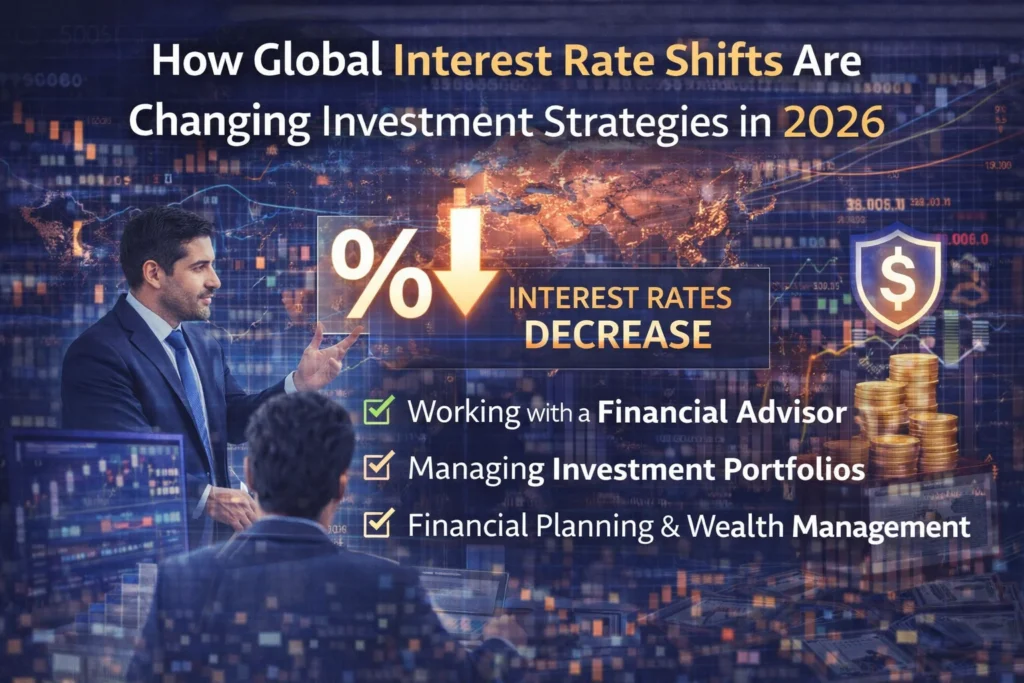
How Global Interest Rate Shifts Are Changing Investment Strategies in 2026

In 2026 the global financial markets are going through a lot of changes. Central banks are adjusting interest rates to control inflation and help the economy grow. This is happening in the United States, Europe and Asia. Policymakers are being very careful to balance helping the economy recover with keeping inflation under control. These changes are affecting businesses, investors and financial markets around the world. Working with a financial advisor or financial planner is more important now than it has ever been. People and businesses want expert help to protect their investments manage risk and make plans for the term. As the markets change quickly more and more people want financial services, wealth management and help with investing. Why Interest Rate Changes Matter for Investors Interest rates affect every part of the global economy. When interest rates go up it becomes more expensive for businesses and consumers to borrow money. At the time some investments become more attractive while others lose value. For example higher interest rates can affect the stock market, real estate and how much it costs for companies to borrow money. Businesses might put off plans to expand because it costs more to borrow money and investors might move their money to more diverse investments. This is where a financial consultant or investment advisor can really help. These professionals help investors understand what is happening in the market and adjust their plans accordingly. A good financial advisor helps build a portfolio that protects clients from market ups and downs while still trying to grow their investments over time. The Growing Importance of Strategic Financial Planning When the economy is uncertain having a financial plan is key to being financially stable in the long term. Businesses and individuals need a plan to manage risks use their resources wisely and make good financial decisions. Professional financial management often involves diversifying investments assessing risks and planning for the term. Many investors want help from a certified planner who can help them match their financial goals with what is happening in the market. Institutions and corporate clients are also relying more on expert financial advisor services to manage their money make the most of their investments and do better financially. Financial institutions are changing their strategies to respond to what’s happening in the global market. Many are expanding their services to help clients deal with economic challenges and find new opportunities to grow. Portfolio Management in a Volatile Market The financial markets are very unpredictable now. Politics, technology and global economic changes are all affecting how the markets behave. In this kind of environment managing a portfolio effectively is crucial. Having a portfolio helps reduce risk while still trying to get good returns over time. Professional investment management involves balancing types of investments, such as stocks, bonds and alternative investments. With the help of an investment advisor investors can find opportunities while avoiding too much risk. The goal of managing wealth is not just to grow it but to protect it during uncertain times. Long-Term Financial Security and Retirement Planning Another area where expert advice’s really important is planning for retirement. As the economy changes individuals need to rethink their term financial plans to make sure they are stable in the future. Inflation rising living costs and changes in the investment markets mean that planning for retirement is more complicated than ever. A professional financial advisor can help create a plan that includes saving strategies, diverse investments and tax planning. Good tax planning also helps investors get the most out of their money while paying as tax as possible. Why Professional Financial Guidance Is More Important Than Ever The financial world is getting more and more complex. Global markets are connected economic trends change quickly. Investment opportunities are always evolving. For individuals, businesses and institutions working with a trusted consultant or experienced financial planner can provide valuable insights and guidance. Whether it involves managing investments planning for the term or advanced wealth management expert advice helps clients navigate uncertainty and make confident financial decisions. As the global economy keeps changing in 2026 and beyond financial advisors and their services will be essential, for anyone who wants financial stability and growth over time.

Financial Advisor
Corporate Finance, Corporate Training, Financial Advisor

Why Every Business Needs a Financial Advisor in Uncertain Markets

Economic uncertainty has become the new normal for businesses around the world. Rising inflation, geopolitical tensions, interest rate fluctuations, and rapidly evolving financial regulations are creating a complex environment for companies of all sizes. In such conditions, relying solely on internal decision-making can expose organizations to unnecessary financial risks. This is why working with a professional Financial Advisor is no longer just an option for large corporations—it has become a strategic necessity for modern businesses. With the right Financial Planning, structured Investment Management, and professional Financial Advisory Services, companies can navigate uncertainty with confidence and make informed decisions that support long-term stability. Navigating Market Volatility with Expert Financial Planning Market volatility affects nearly every aspect of business operations, from funding costs to investment returns. Without structured Financial Planning, businesses may struggle to adapt to rapid economic changes. A professional Financial Advisor helps companies create a strategic roadmap that aligns financial resources with long-term objectives. This includes evaluating revenue projections, managing operating costs, and preparing for unexpected economic shifts. By implementing disciplined Financial Management strategies, businesses gain the flexibility needed to adjust to changing market conditions. Additionally, professional Financial Consulting services help organizations identify financial inefficiencies and optimize capital allocation. When companies have a clear financial framework, they can make better decisions about expansion, hiring, and investment opportunities. Strengthening Corporate Finance Strategies Effective Corporate Finance management is essential when markets become unpredictable. Businesses must carefully balance growth initiatives with financial stability to avoid liquidity challenges. A qualified Financial Consultant evaluates key financial metrics, including debt structures, funding requirements, and capital allocation strategies. Through professional Financial Advisory Services, businesses can restructure financial strategies to support sustainable growth even during uncertain economic cycles. For example, companies looking to expand operations may require structured funding strategies or new investment opportunities. An experienced Investment Advisor can analyze financial data, evaluate market trends, and recommend the most suitable approach to financing growth. This level of strategic guidance allows businesses to pursue expansion while maintaining strong financial discipline. Protecting Business Assets Through Risk Management Financial uncertainty also increases exposure to risk. Market downturns, regulatory changes, or global economic disruptions can negatively impact business performance if not properly managed. Professional Financial Services providers integrate Risk Management into every financial strategy. This process involves identifying potential threats, analyzing financial vulnerabilities, and developing mitigation strategies. By combining expert Financial Planning with proactive risk assessment, companies can protect capital, maintain operational stability, and avoid costly financial mistakes. Organizations that implement structured risk frameworks are better positioned to withstand economic shocks while continuing to pursue strategic growth opportunities. Optimizing Investments with Portfolio Management Many businesses also maintain investment portfolios, reserves, or surplus capital. Without proper oversight, these funds may not generate optimal returns. Structured Portfolio Management ensures that business investments align with both financial objectives and risk tolerance. A professional Investment Advisor evaluates market conditions and develops diversified strategies that balance growth with stability. Through disciplined Investment Management, businesses can maximize returns while minimizing unnecessary exposure to volatility. This approach is also essential for organizations that manage employee pension funds, retirement plans, or long-term investment reserves. Effective Wealth Management strategies ensure that financial resources are working efficiently to support future business goals. Preparing for Long-Term Financial Sustainability Long-term success requires more than short-term profits. Businesses must prepare for future challenges, including retirement obligations, tax structures, and evolving financial regulations. Experienced Certified Financial Planner professionals help organizations develop sustainable financial frameworks that support long-term success. This includes planning for executive Retirement Planning, optimizing Tax Planning strategies, and strengthening relationships with key Financial Institutions. Companies that work with professional advisors gain access to valuable insights that improve financial resilience and strategic clarity. The Strategic Advantage of Independent Financial Advice Many businesses today prefer working with an Independent Financial Advisor who can provide objective insights without institutional bias. Independent advisors focus on developing customized strategies based on each organization’s unique financial goals. Unlike generic financial solutions, personalized Financial Advisory Services ensure that strategies are tailored to the company’s operational model, industry trends, and growth ambitions. This personalized guidance helps businesses make smarter financial decisions while maintaining control over their long-term financial strategy. Building Confidence in an Uncertain Economy Uncertain markets create both risks and opportunities. Businesses that rely solely on internal financial management may miss critical insights that could improve their performance. By partnering with an experienced Financial Advisor, organizations gain access to expert knowledge, structured Financial Planning, and professional Investment Management strategies. From strengthening Corporate Finance frameworks to improving Portfolio Management and long-term Wealth Management, professional financial guidance provides the clarity businesses need to thrive in unpredictable economic conditions. In today’s dynamic financial landscape, working with the right advisor is not just about managing money—it is about building a resilient financial strategy that supports sustainable growth for years to come.

Global Financial Shifts Are Changing to corporate finance
Corporate Finance, Financial Services

How Recent Global Financial Shifts Are Changing Corporate Strategy in 2026

In early 2026, several major developments in global finance are shaping how businesses and individuals approach economic planning, investment strategy, and risk management. From evolving regulatory coordination to geopolitical events influencing markets, strategic financial planning has never been more essential. Here’s how today’s financial landscape is influencing decision-making — and what it means for companies and investors striving for stability and growth. Stronger Global Financial Regulation and Market Stability Financial regulators around the world are stepping up cross-border cooperation to strengthen market integrity and investor protection. Recently, the U.S. Securities and Exchange Commission (SEC) partnered with Japan’s Financial Services Agency (FSA) in Tokyo for a high-level regulatory dialogue focused on enhancing global cooperation, particularly around digital assets and market oversight. This move underscores an emerging trend: financial authorities are looking beyond borders to harmonize rules and safeguard capital markets. For businesses and investors, it means adapting financial consulting approaches and strategy frameworks that integrate regulatory foresight rather than just short-term gains. Geopolitical Tensions Impacting Global Markets Geopolitical tensions in the Middle East have also intensified market pressures. The International Monetary Fund (IMF) recently highlighted that the economic impact of prolonged conflict could significantly affect inflation, energy prices, and central bank policy decisions around the world. For firms offering investment management and wealth management strategies, this type of event reinforces the need to revisit risk assumptions and portfolio resilience. Rather than reacting to market dips, advisors and corporate leaders must embed geopolitical risk scenarios into their corporate finance and investment planning models. Interest Rates and AI as Key Financial Drivers in 2026 A recent industry survey found that 91% of finance leaders see interest rates as the most important immediate force influencing financial institutions, while AI is expected to be the most transformative long-term factor in finance. This dual focus — managing short-term macroeconomic pressures alongside long-term technological evolution — is reshaping strategic priorities: Modern financial advisors and financial planning teams now need to balance current fiscal conditions with forward-looking innovation strategies. Market Recognition of Financial Leadership and Innovation In other global financial news, major institutions continue to receive accolades for excellence and innovation. For example, international awards recognizing top performing investment banks highlight the role of thoughtful leadership and disciplined execution in maintaining market resilience. For firms aiming to elevate their advisory services, these industry standards serve as benchmarks for quality and credibility in strategic financial services. What These Trends Mean for Businesses and Investors The convergence of regulatory cooperation, geopolitical uncertainty, evolving technology, and shifting economic fundamentals means: 🧠 Strategic Planning Is Imperative Organizations must incorporate risk-based decision frameworks into their financial planning and corporate finance operations. 📊 Professional Advice Adds Value A trusted financial consultant can translate global news into strategic insights — helping clients optimize resources, improve cash flow, and position for future opportunity. 📈 Diversified Investment Strategies Strengthen Resilience Professional investment management and wealth management frameworks that account for macro trends protect capital and support long-term goals. 🤝 Advisor Expertise Builds Confidence Individuals and corporations alike benefit from partnering with experienced financial advisors who integrate market foresight, regulatory understanding, and disciplined strategy into every recommendation. Final Thoughts: Navigate Uncertainty With a Strategic Partner Today’s financial environment demands more than basic advisory services — it requires forward-looking strategy, robust risk assessment, and integrated financial decision-making. As financial markets evolve due to regulatory shifts, geopolitical developments, technological transformation, and economic pressures, partnering with a trusted advisor ensures that your financial strategy remains resilient, competitive, and aligned with long-term objectives. Whether you’re optimizing corporate capital structure, managing personal wealth, or navigating investment volatility, proactive planning and expert guidance are key to navigating change successfully.

Corporate Finance
Corporate Finance

Corporate Finance Strategies That Drive Growth and Resilience

In today’s competitive business environment, strong corporate finance services are the backbone of sustainable growth and long-term success. Whether a company is seeking capital, planning expansion, optimizing working capital, or navigating restructuring, having expert financial guidance is essential. At Synergistic Financial Advisors, our goal is to help organizations make strategic decisions that deliver measurable value, protect stakeholders, and enhance financial resilience. What Is Corporate Finance and Why It Matters Simply put, corporate finance involves managing the financial actions of a business in a way that increases its value while managing risk. It’s not just about budgeting or bookkeeping; it’s about strategic capital allocation, optimizing financial structure, and creating financial frameworks that support growth. A proactive focus on efficient financial management helps companies scale profitably, attract investment, manage debt, and respond confidently to market shifts. Today’s boardrooms recognize that structured financial planning and expert advisory support are not luxuries — they are core competitive advantages. Capital Structure Optimization: Aligning Debt and Equity One of the foundational roles of corporate finance services is advising businesses on optimal capital structure — the mix of debt and equity that minimizes costs and maximizes flexibility. Too much debt can strain cash flow and increase risk. Too little leverage may restrict growth potential. A qualified financial consultant helps companies find the balance by: This alignment helps businesses access capital efficiently while preserving control and strengthening investor confidence. Strategic Planning for Long-Term Growth Corporate finance is inherently future-focused. A key part of our approach is strategic financial planning that supports sustainable growth. This includes: Companies that invest in forward-looking planning are better positioned to withstand market volatility and capitalize on opportunities quickly. Working Capital Management: Keeping Operations Fluid Every business needs working capital — the funds that keep day-to-day operations running. Too little working capital can slow growth and damage supplier relationships. Too much can lock up resources that might otherwise be invested for higher return. Through structured financial advisor support, businesses can: Effective working capital strategies free up cash, reduce financing costs, and improve operational efficiency. Advisory Support for Corporate Transactions Whether acquiring another company, considering a merger, or selling a division, every major transaction carries financial complexity and risk. Sophisticated corporate finance services provide end-to-end advisory support, including: A skilled financial consultant helps clients understand the financial implications of every decision, avoid common pitfalls, and drive value throughout the transition. Restructuring and Financial Turnaround Expertise Not all companies are growing — some are navigating difficult terrain. For businesses facing financial stress, corporate finance plays a critical role in turnaround and restructuring. This process may involve: With experienced advisory support, companies in transition can rebuild stability and position themselves for renewed growth. Why Partner With a Professional Financial Services Firm Corporate financial decisions have far-reaching consequences. Partnering with a trusted financial advisor means: At the intersection of financial planning, execution, and performance measurement, professional guidance turns complexity into clarity. Final Thought: Corporate Finance as a Strategic Advantage In a business world driven by change, having the right corporate finance strategy is a defining success factor. Whether your organization is focused on growth, stability, capital access, or transition, expert financial advisory support ensures you make decisions with confidence and foresight. By integrating capital structure optimization, working capital efficiency, transaction advisory, and rigorous planning, businesses can build resilience, unlock value, and sustain competitive advantage.

Financial Planning & Wealth Management
Financial Advisory Insights, Financial Insights, Financial Models, Financial Strategy

Why Strategic Financial Planning Is Essential in Today’s Uncertain Economy

Economic uncertainty has become a constant reality for individuals, businesses, and institutions alike. Inflationary pressure, shifting interest rates, regulatory changes, and global market volatility have made financial decision-making far more complex than it was a decade ago. In this environment, relying on intuition alone is no longer enough. Structured financial planning supported by professional guidance has become essential. At Synergistic Financial Advisors, the focus is not just on numbers, but on helping clients build clarity, resilience, and long-term financial confidence. The Evolving Role of a Financial Advisor The role of a financial advisor has expanded significantly. Today, clients expect more than basic investment recommendations. They seek strategic insight, risk awareness, and long-term alignment between financial decisions and real-world goals. Professional financial services now integrate planning, advisory, and execution into a cohesive framework. Whether working with corporations, professionals, or high-net-worth individuals, a modern advisor acts as a strategic partner rather than a transactional service provider. This is why many individuals actively search for financial advisors near me who offer not just accessibility, but credibility, independence, and a structured advisory approach. Why Financial Planning Is the Foundation of Stability At the core of long-term success lies disciplined financial planning. Without a clear plan, financial decisions often become reactive—driven by market headlines rather than strategy. A qualified financial planner evaluates income, assets, liabilities, risk exposure, and future objectives to create a roadmap that adapts over time. This process is especially important during periods of economic uncertainty, when unplanned decisions can have lasting consequences. Working with a certified financial planner adds an additional layer of confidence, as certification reflects professional discipline, ethical standards, and technical expertise. Wealth Management Beyond Short-Term Returns Many investors associate wealth management with aggressive growth strategies. In reality, sustainable wealth is built through balance—growth, preservation, and risk control. Professional investment management focuses on long-term value creation rather than short-term speculation. A structured approach helps investors remain disciplined during market volatility, avoiding emotional decision-making. Through expert portfolio management, assets are diversified across sectors and strategies, reducing concentration risk and improving long-term resilience. This disciplined structure is a key reason why institutions and private investors alike rely on professional advisory support. The Importance of Independent and Fiduciary Advice Trust plays a critical role in financial decision-making. An independent financial advisor operates without product bias, ensuring that recommendations are aligned solely with client interests. Even more important is the role of a fiduciary financial advisor, who is legally and ethically obligated to act in the client’s best interest. This fiduciary responsibility promotes transparency, accountability, and long-term alignment. For those seeking the best financial advisors, fiduciary standards are no longer optional—they are essential. Retirement Planning Requires Early and Ongoing Attention One of the most overlooked aspects of financial strategy is retirement planning. Many individuals delay planning, assuming it can be addressed later. However, successful retirement outcomes are typically the result of early action and regular review. Effective retirement strategies consider income sustainability, inflation, healthcare costs, and lifestyle expectations. A trusted financial advisor helps structure these plans realistically, adjusting them as personal or business circumstances evolve. Proactive planning creates flexibility. Delayed planning often limits options. Why Integrated Financial Services Matter Modern financial challenges cannot be solved in isolation. Today’s most effective financial services are integrated—combining advisory insight, strategic planning, and execution under one framework. This integrated approach benefits individuals, businesses, and financial institutions by improving decision quality, reducing risk exposure, and supporting long-term objectives. Whether the goal is capital growth, stability, or transition planning, professional guidance provides structure in an otherwise uncertain financial environment. Final Thoughts In a world where financial complexity continues to grow, working with a trusted financial consultant is no longer a luxury—it is a strategic necessity. From financial planning and wealth management to portfolio management and retirement planning, expert guidance helps turn uncertainty into opportunity. The right advisory partnership does more than manage finances—it builds confidence, clarity, and long-term success.

Businesses Are Rethinking Financial Strategy
Business & Investment Strategy, Business Advisory, Business Strategy

Why Businesses Are Rethinking Financial Strategy in 2026

The global business environment is changing faster than it has in years. Inflation is easing in some regions, interest rates remain uncertain in others, and capital markets are becoming more selective. For many companies, this has triggered a deeper rethink of how financial decisions are made—not just for growth, but for stability. In 2026, financial strategy is no longer limited to raising funds or managing cash flow. Businesses are now focusing on resilience, smarter capital allocation, and long-term value creation. A Shift From Growth-at-All-Costs to Sustainable Planning Over the past few years, many companies expanded aggressively. Today, boards and management teams are far more cautious. The focus has shifted toward projects that deliver predictable returns and protect downside risk. This is where structured corporate finance planning becomes essential. Companies are evaluating debt structures, refinancing existing obligations, and reassessing capital structures to ensure they can withstand market volatility. Businesses that actively review their funding mix are finding it easier to manage costs and maintain flexibility. Portfolio Discipline Is Back in Focus Another major trend is the renewed emphasis on disciplined investing. Investors and corporates alike are prioritizing risk-adjusted returns rather than speculative gains. This has increased demand for professional portfolio management strategies that balance growth opportunities with capital preservation. Rather than chasing short-term market movements, businesses are aligning investments with long-term objectives—whether that’s geographic expansion, sector diversification, or income stability. Advisory Support Is Becoming a Strategic Necessity As regulations evolve and markets become more complex, decision-makers are seeking deeper insights before acting. Today’s advisory services go beyond basic consulting. They support feasibility analysis, valuation, restructuring, and strategic planning—especially for companies entering new markets or restructuring existing operations. In many cases, early advisory involvement helps businesses avoid costly mistakes later. It also improves lender confidence and investor transparency. Building Financial Capability From Within One often overlooked trend is the growing importance of internal financial skills. Companies are investing in corporate training to strengthen their teams’ understanding of financial modeling, risk assessment, and performance monitoring. This internal capability reduces dependency on external support and improves day-to-day decision-making. Well-trained teams respond faster to market changes and manage financial risks more effectively. What This Means for Businesses Today The companies performing best right now are not necessarily the biggest or the fastest growing. They are the ones that: Staying informed through reliable financial insights and analysis is critical. Following industry updates and expert commentary through platforms like our blog helps businesses stay aligned with emerging trends and practical strategies. Final Thought 2026 is shaping up to be a year where clarity and discipline matter more than ambition alone. Businesses that treat financial strategy as an ongoing process—not a one-time exercise—are better positioned to grow, adapt, and succeed in an increasingly complex global economy.

financial advisory services
Business Advisory, Business Strategy, Corporate Advisory, Financial Advisory Insights, Financial Insights

Why Integrated Financial Advisory Services Are Becoming Critical for Businesses in 2026

Over the past year, businesses across emerging and developed markets have been operating in a much tougher environment. Higher interest rates, tighter liquidity, regulatory pressure, and shifting investor expectations have made financial decision-making more complex than ever. What’s changing is not just the speed of business, but the depth of financial planning required to stay competitive. This is where integrated financial advisory services are starting to matter more than isolated solutions. A Shift from Standalone Advice to Integrated Financial Support Earlier, companies often relied on separate consultants for financing, valuation, or operational advice. Today, that fragmented approach creates delays, higher risk, and inconsistent decision-making. More businesses are now looking for advisory firms that can support them across: Firms offering Corporate Finance advisory are increasingly involved beyond transactions, helping businesses evaluate mergers, debt structures, and funding strategies in line with their long-term objectives.(Explore SFA’s approach to Corporate Finance services) Wealth Preservation Is No Longer Passive Another major trend is the growing focus on active wealth management. Market volatility has pushed individuals, family offices, and institutional investors to rethink how portfolios are structured and monitored. Instead of reactive investing, there is a strong demand for: This is why professional Portfolio Management services are gaining traction, especially among clients seeking long-term stability rather than short-term returns.(Learn more about Portfolio Management at SFA: https://sfaresearch.com/portfolio-management/) Advisory Services Are Becoming Strategy-Driven Modern advisory is no longer limited to reports and spreadsheets. Businesses now expect advisors to be involved in decision execution, not just planning. Across sectors, companies are using Advisory Services for: This hands-on approach helps management teams make informed decisions during critical phases of growth or restructuring.(See how SFA delivers Advisory Services: https://sfaresearch.com/advisory-services/) Corporate Training Is Supporting Financial Performance One overlooked trend is the role of corporate training in financial outcomes. Many organizations are realizing that strategy fails when teams lack the skills to execute it. As a result, companies are investing in Corporate Training programs that focus on: Well-designed training programs directly impact productivity, cost control, and long-term profitability.(Discover SFA’s Corporate Training programs: https://sfaresearch.com/corporate-training/) What This Means for Businesses Going Forward The common theme across all these developments is integration. Businesses are no longer looking for advisors who operate in silos. They want partners who understand the full financial picture and can align strategy, execution, and people. Firms that combine corporate finance, advisory, portfolio management, and training under one structure are better positioned to support clients in uncertain markets. For ongoing insights on financial strategy, advisory trends, and market developments, visit the SFA Blog

Scroll to Top