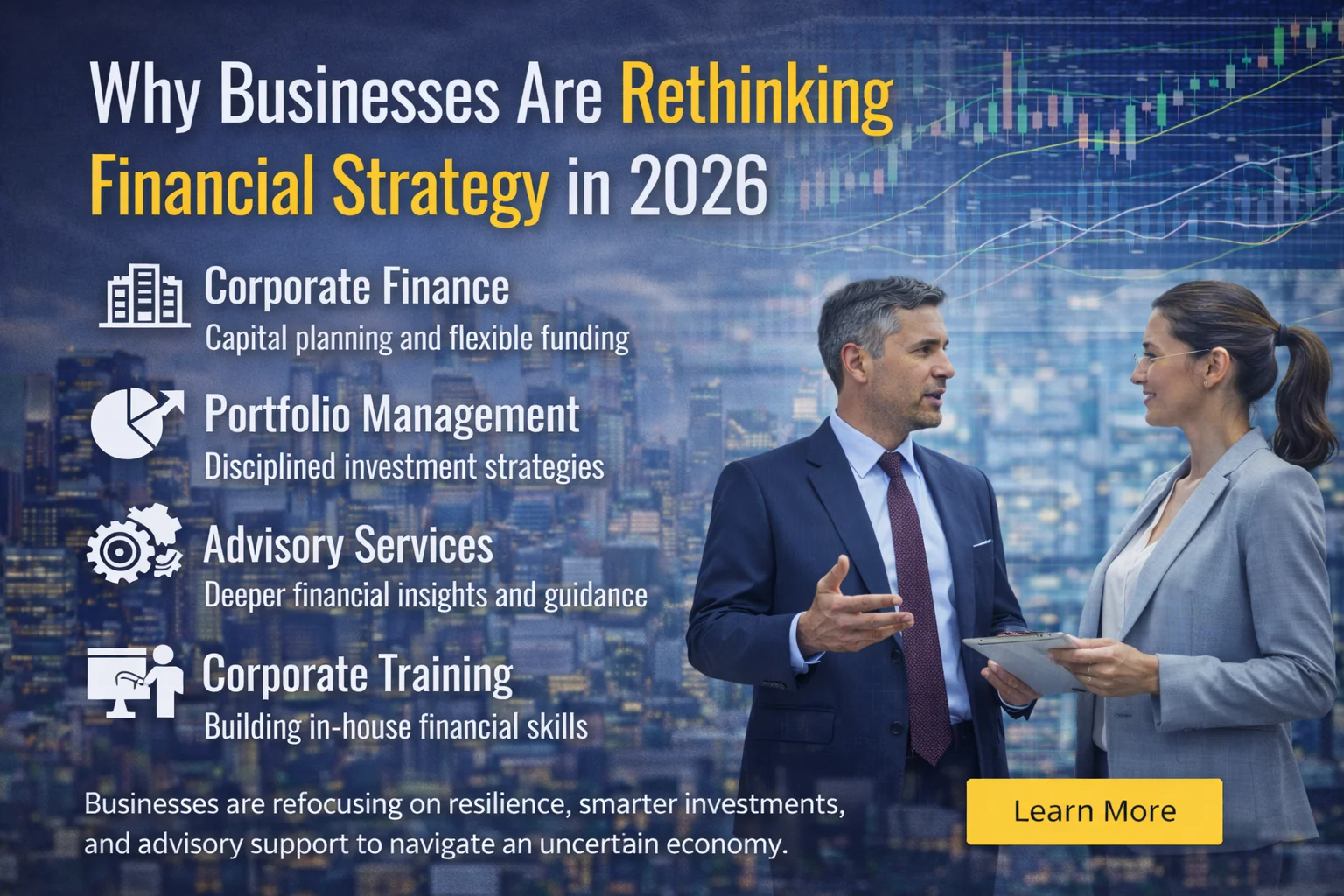
The global business environment is changing faster than it has in years. Inflation is easing in some regions, interest rates remain uncertain in others, and capital markets are becoming more selective. For many companies, this has triggered a deeper rethink of how financial decisions are made—not just for growth, but for stability.
In 2026, financial strategy is no longer limited to raising funds or managing cash flow. Businesses are now focusing on resilience, smarter capital allocation, and long-term value creation.
A Shift From Growth-at-All-Costs to Sustainable Planning
Over the past few years, many companies expanded aggressively. Today, boards and management teams are far more cautious. The focus has shifted toward projects that deliver predictable returns and protect downside risk.
This is where structured corporate finance planning becomes essential. Companies are evaluating debt structures, refinancing existing obligations, and reassessing capital structures to ensure they can withstand market volatility. Businesses that actively review their funding mix are finding it easier to manage costs and maintain flexibility.
Portfolio Discipline Is Back in Focus
Another major trend is the renewed emphasis on disciplined investing. Investors and corporates alike are prioritizing risk-adjusted returns rather than speculative gains. This has increased demand for professional portfolio management strategies that balance growth opportunities with capital preservation.
Rather than chasing short-term market movements, businesses are aligning investments with long-term objectives—whether that’s geographic expansion, sector diversification, or income stability.
Advisory Support Is Becoming a Strategic Necessity
As regulations evolve and markets become more complex, decision-makers are seeking deeper insights before acting. Today’s advisory services go beyond basic consulting. They support feasibility analysis, valuation, restructuring, and strategic planning—especially for companies entering new markets or restructuring existing operations.
In many cases, early advisory involvement helps businesses avoid costly mistakes later. It also improves lender confidence and investor transparency.
Building Financial Capability From Within
One often overlooked trend is the growing importance of internal financial skills. Companies are investing in corporate training to strengthen their teams’ understanding of financial modeling, risk assessment, and performance monitoring.
This internal capability reduces dependency on external support and improves day-to-day decision-making. Well-trained teams respond faster to market changes and manage financial risks more effectively.
What This Means for Businesses Today
The companies performing best right now are not necessarily the biggest or the fastest growing. They are the ones that:
- Plan capital structure carefully
- Monitor financial performance consistently
- Seek expert advice before major decisions
- Invest in people and processes
Staying informed through reliable financial insights and analysis is critical. Following industry updates and expert commentary through platforms like our blog helps businesses stay aligned with emerging trends and practical strategies.
Final Thought
2026 is shaping up to be a year where clarity and discipline matter more than ambition alone. Businesses that treat financial strategy as an ongoing process—not a one-time exercise—are better positioned to grow, adapt, and succeed in an increasingly complex global economy.