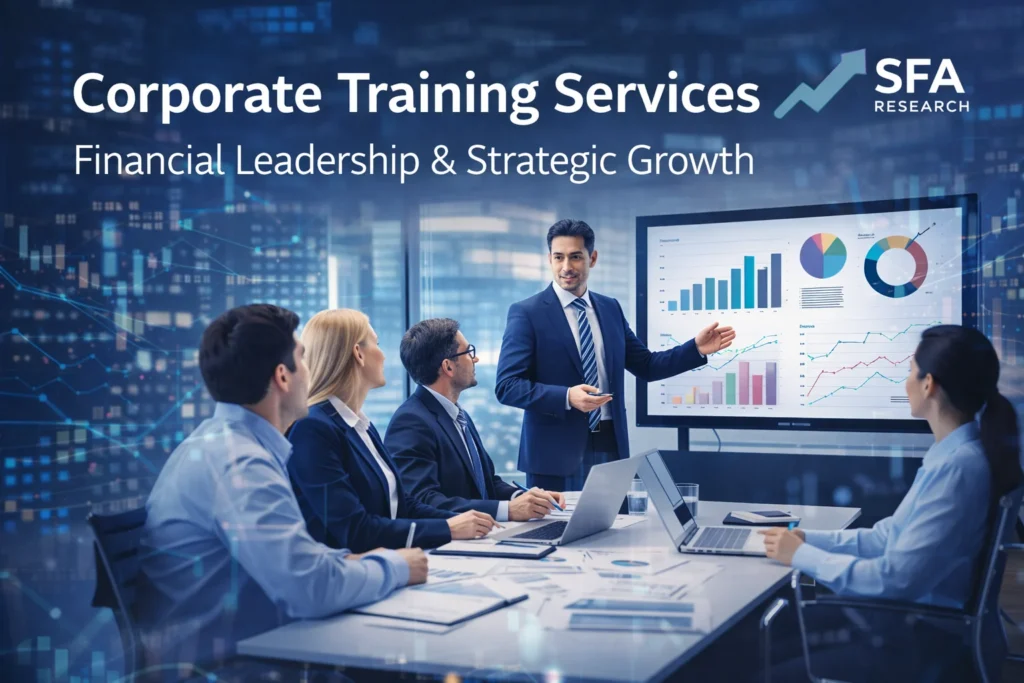
Corporate Training

Corporate Training
Corporate Training

Corporate Training for Strategic Excellence & Financial Leadership

In today’s fast-paced business world, companies must constantly adapt, innovate, and evolve. One of the most effective ways to achieve sustained performance and competitive advantage is through structured corporate training programs designed to build financial, strategic, and leadership capabilities across organizations. At Synergistic Financial Advisors, we believe that the right training not only strengthens skills but also empowers teams to make smarter financial decisions, improve operational efficiency, and drive long-term growth. Why Corporate Training Matters in Modern Business Corporate environments are becoming increasingly complex. Whether a company is scaling up, restructuring, or navigating market volatility, well-designed corporate training programs ensure that teams are prepared with the knowledge and tools needed to respond effectively. Training is no longer an optional perk — it is a strategic investment that: Today, organizations expect more than theoretical knowledge. They want actionable insights that drive results. That’s where professional training, grounded in real-world financial strategy, becomes transformational. Financial Planning and Advisory Training for Business Leaders Financial literacy and strategic thinking are core competencies for leaders across functions. Executives, finance teams, and department heads benefit greatly from training that deepens their understanding of financial planning, forecasting, and performance analysis. Our training programs cover essential topics such as: Developing these skills helps teams think beyond spreadsheets, enabling them to anticipate challenges and contribute meaningfully to corporate goals. Training for Financial Advisors and Consultants Professionals working in advisory roles — such as financial advisor, financial consultant, or investment advisor — must stay ahead of evolving market trends, regulations, and client expectations. Our corporate programs tailored for advisory teams include: By investing in specialized training for advisory professionals, firms enhance credibility, build trust, and deliver higher value to clients. Building Strategic Financial Teams Organizational success increasingly depends on cross-functional financial understanding. Whether it’s sales forecasting, budgeting, or financial risk communication, non-financial professionals benefit from structured learning that bridges the gap between operational expertise and financial literacy. For example: Such multidisciplinary training fosters alignment, improves collaboration, and supports better decision-making at all levels. Customized Corporate Training That Delivers Results Every organization has unique challenges and goals. Off-the-shelf training rarely delivers strategic impact. That’s why our corporate training offerings are fully customized to match: We begin with a diagnostic phase — understanding organizational needs, current capabilities, and desired outcomes. Then, we design targeted modules that support measurable change. Why Professional Training Enhances Financial Services Delivery When teams are trained in financial concepts, their ability to collaborate with clients and internal stakeholders improves significantly. For firms offering financial services, such as wealth management or investment management, having well-trained professionals helps: Corporate training solidifies not just individual skills, but the firm’s overall market credibility. Aligning Training with Broader Business Strategy Corporate Training should never be isolated from larger strategic objectives. At its best, it aligns with: This ensures that training outcomes are not just theoretical but actively support business success. Final Thought: Training as a Strategic Investment Companies that prioritize education and skill enhancement gain a competitive edge. Whether you are a mid-sized enterprise, a financial institution, or a professional services firm, structured corporate training programs designed around financial acumen bolster resilience, innovation, and long-term value creation. At its core, effective corporate training empowers people — and empowered people drive results.

Business Strategy
Business Strategy, Financial Advisory Insights, Financial Insights

How Today’s Global Financial Trends Are Impacting Business Strategy and Advisory in 2026

Financial markets and corporate activity continue to evolve rapidly in early 2026, presenting opportunities and challenges for businesses, investors, and professionals alike. From strong deal-making in financial services to strategic moves by global banks, recent developments highlight the ongoing importance of informed financial planning and advisory. 1. Financial Services M&A Deal Value Soars So far in 2025, the global financial services sector saw a significant increase in deal value, with total disclosed transaction value rising by nearly 49% compared to the previous year. There were 93 deals above $1 billion, representing a large portion of total deal value, even as broader market conditions remained challenging. This surge in high-value deals underscores the continued momentum in strategic transactions and corporate consolidation. For businesses considering mergers, acquisitions, or divestitures, having strong corporate finance expertise is crucial to navigate valuations, negotiations, and integration planning. 2. Banks Are Posting Profits and Shifting Strategies Major financial institutions such as Barclays have reported higher profits and adjusted strategic priorities, including leveraging technology like artificial intelligence to improve efficiency and returns. At the same time, large banks are redefining their focus areas to capture market share in both traditional banking and wealth management. These developments influence how corporations plan capital allocation and investment strategies, areas where professional advisory services can provide perspective on risk, cost efficiency, and long-term structuring. 3. Big Deals Reflect Strategic Investment Shifts One of the most interesting stories in the market today comes from NatWest’s £2.7 billion acquisition of Evelyn Partners — one of the UK’s largest wealth managers. This move highlights a growing focus on wealth and private client services. For businesses and individuals looking to preserve and grow capital, structured portfolio management becomes vital, especially when global economic signals are mixed and investor sentiment fluctuates. 4. Strategic Investment Tools Expand with Tech Bonds Another noteworthy development is the issuance of a rare 100-year sterling bond by a major technology company, reflecting an appetite for long-term investment instruments in global capital markets. Such long-term securities can influence asset allocation strategies and institutional investment patterns. For organizations planning long-term growth or adjusting their capital mix, understanding these instruments and trends plays into how advisory work and financial analysis support practical planning. 5. Finance Teams Prioritize Efficiency and Cost Control A recent survey of finance leaders from the banking and financial services sector shows that cost control and operational efficiency remain top priorities in 2026. This focus is reflected in how companies approach budgeting, operational restructuring, and financial forecasting. Robust corporate training programs in finance and analysis help internal teams adapt to these priorities, improving performance and supporting strategy execution. What These Trends Mean for Your Business These global financial updates are not just headlines — they reflect deeper shifts in how companies plan and execute financial strategy. Whether your organization is preparing for investment, restructuring debt, expanding into new markets, or optimizing internal processes, the evolving landscape reinforces the need for integrated, forward-looking financial support. Staying informed and proactive in financial decision-making allows businesses to turn uncertainty into opportunity. For ongoing insights and updates on financial trends and strategic planning, check out our latest articles on the SFA Blog.

financial advisory services
Corporate Advisory, Financial Insights

Why Integrated Financial Advisory Services Matter More Than Ever in 2026

Businesses across the world are operating in a very different environment than they were even a few years ago. Rising interest rates, tighter regulations, shifting investor expectations, and global economic uncertainty have made financial decision-making more complex than ever. In this environment, companies can no longer rely on fragmented financial advice. What they need instead is a structured, integrated approach—one that aligns strategy, capital, risk, and long-term growth. This is where integrated financial advisory services are becoming critical for businesses operating in both emerging and global markets. The Changing Financial Landscape for Businesses Today’s organizations face pressure from multiple directions at once. Expansion plans must consider funding costs. Mergers and acquisitions require deeper due diligence. Investors expect transparency, compliance, and measurable performance. At the same time, leadership teams are expected to make faster decisions with less room for error. Traditional advisory models, where corporate finance, investment strategy, and operational planning are handled separately, often create gaps. These gaps can lead to missed opportunities, higher risk exposure, and inefficient capital allocation. An integrated financial advisory model helps close those gaps by bringing all financial functions under one strategic framework. Corporate Finance as the Foundation of Growth For many businesses, growth begins with strong corporate finance planning. Whether a company is planning an acquisition, raising debt, restructuring operations, or optimizing capital structure, these decisions shape its future. Professional corporate finance advisory services help organizations evaluate opportunities with clarity. From mergers and acquisitions to debt advisory and capital optimization, having expert support ensures decisions are backed by solid analysis and real-world execution experience. You can learn more about structured financial planning and transaction support through SFA’s Corporate Finance services:https://sfaresearch.com/corporate-finance/ Why Portfolio Management Is No Longer Just for Individuals Portfolio management is often associated with individual wealth, but the same principles apply to businesses, family offices, and institutional investors. Managing assets without a clear strategy exposes capital to unnecessary volatility. Effective portfolio management focuses on balancing risk and return while aligning investments with long-term objectives. In uncertain markets, disciplined portfolio strategies help preserve capital while still capturing growth opportunities. Businesses and high-net-worth individuals increasingly rely on professional Portfolio Management services to navigate market cycles and protect value:https://sfaresearch.com/portfolio-management/ Advisory Services That Support Better Decision-Making Strategic decisions rarely exist in isolation. A new project, expansion into a new market, or corporate restructuring requires financial, operational, and market analysis working together. Integrated advisory services support businesses throughout the decision-making process—from feasibility studies and valuations to performance reviews and restructuring strategies. The goal is not just to advise, but to guide execution with measurable outcomes. Organizations seeking clarity during growth, transition, or recovery benefit from comprehensive Advisory Services that connect strategy with numbers:https://sfaresearch.com/advisory-services/ The Role of Corporate Training in Financial Performance Even the best strategies fail without capable teams to execute them. Financial literacy, analytical skills, and strategic thinking within an organization directly affect performance. This is why corporate training has become a vital part of integrated financial advisory. Well-designed training programs improve productivity, strengthen decision-making, and align teams with business goals. Customized Corporate Training programs help organizations build internal capability rather than relying solely on external support:https://sfaresearch.com/corporate-training/ Why Integration Makes the Difference When corporate finance, portfolio management, advisory services, and training work independently, businesses often experience misalignment. Integrated financial advisory services ensure that strategy, capital, people, and execution move in the same direction. This approach is especially valuable for companies operating in emerging markets while serving global stakeholders. Local market understanding combined with global best practices creates a strong competitive advantage. Firms like Synergistic Financial Advisors bring this integration together by offering end-to-end financial and analytical support, helping clients move from planning to execution with confidence. Looking Ahead: What Businesses Should Focus On As we move further into 2026, businesses that prioritize structured financial decision-making will be better positioned to manage risk and seize opportunity. Key focus areas include: Companies that take a proactive approach today will be better prepared for market shifts tomorrow. Final Thoughts Integrated financial advisory services are no longer optional—they are becoming essential. In a complex global economy, businesses need partners who understand finance, strategy, and execution together. If you’re exploring insights, trends, and practical guidance on financial advisory, corporate finance, and investment strategy, you can find more updates on SFA’s Blog:https://sfaresearch.com/blog/

financial advisory services
Business Advisory, Business Strategy, Corporate Advisory, Financial Advisory Insights, Financial Insights

Why Integrated Financial Advisory Services Are Becoming Critical for Businesses in 2026

Over the past year, businesses across emerging and developed markets have been operating in a much tougher environment. Higher interest rates, tighter liquidity, regulatory pressure, and shifting investor expectations have made financial decision-making more complex than ever. What’s changing is not just the speed of business, but the depth of financial planning required to stay competitive. This is where integrated financial advisory services are starting to matter more than isolated solutions. A Shift from Standalone Advice to Integrated Financial Support Earlier, companies often relied on separate consultants for financing, valuation, or operational advice. Today, that fragmented approach creates delays, higher risk, and inconsistent decision-making. More businesses are now looking for advisory firms that can support them across: Firms offering Corporate Finance advisory are increasingly involved beyond transactions, helping businesses evaluate mergers, debt structures, and funding strategies in line with their long-term objectives.(Explore SFA’s approach to Corporate Finance services) Wealth Preservation Is No Longer Passive Another major trend is the growing focus on active wealth management. Market volatility has pushed individuals, family offices, and institutional investors to rethink how portfolios are structured and monitored. Instead of reactive investing, there is a strong demand for: This is why professional Portfolio Management services are gaining traction, especially among clients seeking long-term stability rather than short-term returns.(Learn more about Portfolio Management at SFA: https://sfaresearch.com/portfolio-management/) Advisory Services Are Becoming Strategy-Driven Modern advisory is no longer limited to reports and spreadsheets. Businesses now expect advisors to be involved in decision execution, not just planning. Across sectors, companies are using Advisory Services for: This hands-on approach helps management teams make informed decisions during critical phases of growth or restructuring.(See how SFA delivers Advisory Services: https://sfaresearch.com/advisory-services/) Corporate Training Is Supporting Financial Performance One overlooked trend is the role of corporate training in financial outcomes. Many organizations are realizing that strategy fails when teams lack the skills to execute it. As a result, companies are investing in Corporate Training programs that focus on: Well-designed training programs directly impact productivity, cost control, and long-term profitability.(Discover SFA’s Corporate Training programs: https://sfaresearch.com/corporate-training/) What This Means for Businesses Going Forward The common theme across all these developments is integration. Businesses are no longer looking for advisors who operate in silos. They want partners who understand the full financial picture and can align strategy, execution, and people. Firms that combine corporate finance, advisory, portfolio management, and training under one structure are better positioned to support clients in uncertain markets. For ongoing insights on financial strategy, advisory trends, and market developments, visit the SFA Blog

Scroll to Top