Business advisory

Global interest rate
Business Advisory, Business Strategy, Financial Advisory Insights

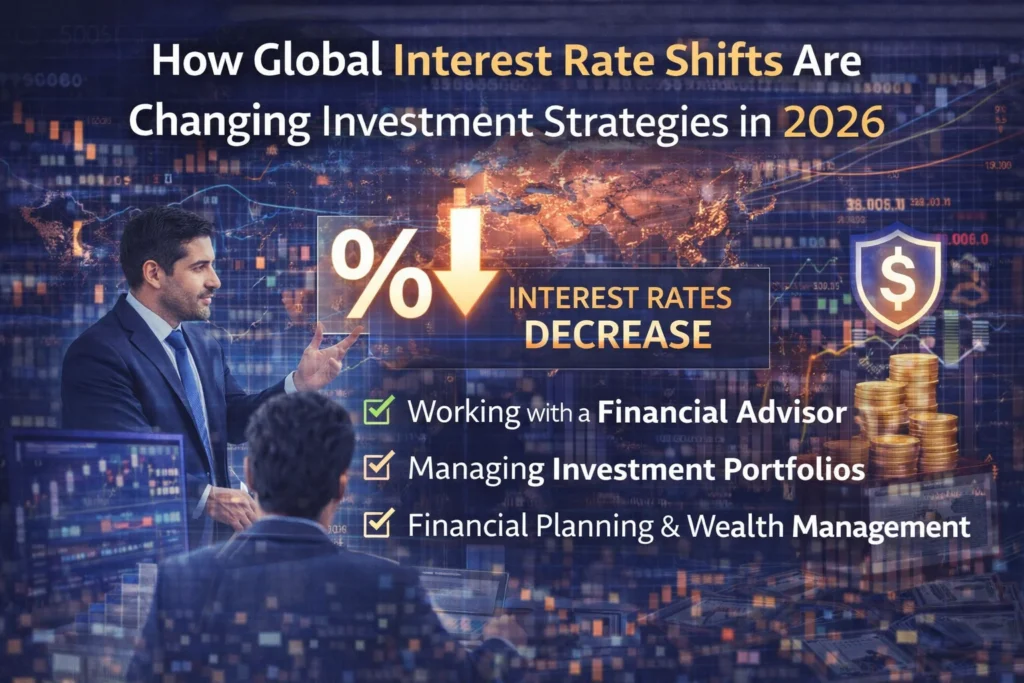
How Global Interest Rate Shifts Are Changing Investment Strategies in 2026

In 2026 the global financial markets are going through a lot of changes. Central banks are adjusting interest rates to control inflation and help the economy grow. This is happening in the United States, Europe and Asia. Policymakers are being very careful to balance helping the economy recover with keeping inflation under control. These changes are affecting businesses, investors and financial markets around the world. Working with a financial advisor or financial planner is more important now than it has ever been. People and businesses want expert help to protect their investments manage risk and make plans for the term. As the markets change quickly more and more people want financial services, wealth management and help with investing. Why Interest Rate Changes Matter for Investors Interest rates affect every part of the global economy. When interest rates go up it becomes more expensive for businesses and consumers to borrow money. At the time some investments become more attractive while others lose value. For example higher interest rates can affect the stock market, real estate and how much it costs for companies to borrow money. Businesses might put off plans to expand because it costs more to borrow money and investors might move their money to more diverse investments. This is where a financial consultant or investment advisor can really help. These professionals help investors understand what is happening in the market and adjust their plans accordingly. A good financial advisor helps build a portfolio that protects clients from market ups and downs while still trying to grow their investments over time. The Growing Importance of Strategic Financial Planning When the economy is uncertain having a financial plan is key to being financially stable in the long term. Businesses and individuals need a plan to manage risks use their resources wisely and make good financial decisions. Professional financial management often involves diversifying investments assessing risks and planning for the term. Many investors want help from a certified planner who can help them match their financial goals with what is happening in the market. Institutions and corporate clients are also relying more on expert financial advisor services to manage their money make the most of their investments and do better financially. Financial institutions are changing their strategies to respond to what’s happening in the global market. Many are expanding their services to help clients deal with economic challenges and find new opportunities to grow. Portfolio Management in a Volatile Market The financial markets are very unpredictable now. Politics, technology and global economic changes are all affecting how the markets behave. In this kind of environment managing a portfolio effectively is crucial. Having a portfolio helps reduce risk while still trying to get good returns over time. Professional investment management involves balancing types of investments, such as stocks, bonds and alternative investments. With the help of an investment advisor investors can find opportunities while avoiding too much risk. The goal of managing wealth is not just to grow it but to protect it during uncertain times. Long-Term Financial Security and Retirement Planning Another area where expert advice’s really important is planning for retirement. As the economy changes individuals need to rethink their term financial plans to make sure they are stable in the future. Inflation rising living costs and changes in the investment markets mean that planning for retirement is more complicated than ever. A professional financial advisor can help create a plan that includes saving strategies, diverse investments and tax planning. Good tax planning also helps investors get the most out of their money while paying as tax as possible. Why Professional Financial Guidance Is More Important Than Ever The financial world is getting more and more complex. Global markets are connected economic trends change quickly. Investment opportunities are always evolving. For individuals, businesses and institutions working with a trusted consultant or experienced financial planner can provide valuable insights and guidance. Whether it involves managing investments planning for the term or advanced wealth management expert advice helps clients navigate uncertainty and make confident financial decisions. As the global economy keeps changing in 2026 and beyond financial advisors and their services will be essential, for anyone who wants financial stability and growth over time.

Financial Advisor
Corporate Finance, Corporate Training, Financial Advisor

Why Every Business Needs a Financial Advisor in Uncertain Markets

Economic uncertainty has become the new normal for businesses around the world. Rising inflation, geopolitical tensions, interest rate fluctuations, and rapidly evolving financial regulations are creating a complex environment for companies of all sizes. In such conditions, relying solely on internal decision-making can expose organizations to unnecessary financial risks. This is why working with a professional Financial Advisor is no longer just an option for large corporations—it has become a strategic necessity for modern businesses. With the right Financial Planning, structured Investment Management, and professional Financial Advisory Services, companies can navigate uncertainty with confidence and make informed decisions that support long-term stability. Navigating Market Volatility with Expert Financial Planning Market volatility affects nearly every aspect of business operations, from funding costs to investment returns. Without structured Financial Planning, businesses may struggle to adapt to rapid economic changes. A professional Financial Advisor helps companies create a strategic roadmap that aligns financial resources with long-term objectives. This includes evaluating revenue projections, managing operating costs, and preparing for unexpected economic shifts. By implementing disciplined Financial Management strategies, businesses gain the flexibility needed to adjust to changing market conditions. Additionally, professional Financial Consulting services help organizations identify financial inefficiencies and optimize capital allocation. When companies have a clear financial framework, they can make better decisions about expansion, hiring, and investment opportunities. Strengthening Corporate Finance Strategies Effective Corporate Finance management is essential when markets become unpredictable. Businesses must carefully balance growth initiatives with financial stability to avoid liquidity challenges. A qualified Financial Consultant evaluates key financial metrics, including debt structures, funding requirements, and capital allocation strategies. Through professional Financial Advisory Services, businesses can restructure financial strategies to support sustainable growth even during uncertain economic cycles. For example, companies looking to expand operations may require structured funding strategies or new investment opportunities. An experienced Investment Advisor can analyze financial data, evaluate market trends, and recommend the most suitable approach to financing growth. This level of strategic guidance allows businesses to pursue expansion while maintaining strong financial discipline. Protecting Business Assets Through Risk Management Financial uncertainty also increases exposure to risk. Market downturns, regulatory changes, or global economic disruptions can negatively impact business performance if not properly managed. Professional Financial Services providers integrate Risk Management into every financial strategy. This process involves identifying potential threats, analyzing financial vulnerabilities, and developing mitigation strategies. By combining expert Financial Planning with proactive risk assessment, companies can protect capital, maintain operational stability, and avoid costly financial mistakes. Organizations that implement structured risk frameworks are better positioned to withstand economic shocks while continuing to pursue strategic growth opportunities. Optimizing Investments with Portfolio Management Many businesses also maintain investment portfolios, reserves, or surplus capital. Without proper oversight, these funds may not generate optimal returns. Structured Portfolio Management ensures that business investments align with both financial objectives and risk tolerance. A professional Investment Advisor evaluates market conditions and develops diversified strategies that balance growth with stability. Through disciplined Investment Management, businesses can maximize returns while minimizing unnecessary exposure to volatility. This approach is also essential for organizations that manage employee pension funds, retirement plans, or long-term investment reserves. Effective Wealth Management strategies ensure that financial resources are working efficiently to support future business goals. Preparing for Long-Term Financial Sustainability Long-term success requires more than short-term profits. Businesses must prepare for future challenges, including retirement obligations, tax structures, and evolving financial regulations. Experienced Certified Financial Planner professionals help organizations develop sustainable financial frameworks that support long-term success. This includes planning for executive Retirement Planning, optimizing Tax Planning strategies, and strengthening relationships with key Financial Institutions. Companies that work with professional advisors gain access to valuable insights that improve financial resilience and strategic clarity. The Strategic Advantage of Independent Financial Advice Many businesses today prefer working with an Independent Financial Advisor who can provide objective insights without institutional bias. Independent advisors focus on developing customized strategies based on each organization’s unique financial goals. Unlike generic financial solutions, personalized Financial Advisory Services ensure that strategies are tailored to the company’s operational model, industry trends, and growth ambitions. This personalized guidance helps businesses make smarter financial decisions while maintaining control over their long-term financial strategy. Building Confidence in an Uncertain Economy Uncertain markets create both risks and opportunities. Businesses that rely solely on internal financial management may miss critical insights that could improve their performance. By partnering with an experienced Financial Advisor, organizations gain access to expert knowledge, structured Financial Planning, and professional Investment Management strategies. From strengthening Corporate Finance frameworks to improving Portfolio Management and long-term Wealth Management, professional financial guidance provides the clarity businesses need to thrive in unpredictable economic conditions. In today’s dynamic financial landscape, working with the right advisor is not just about managing money—it is about building a resilient financial strategy that supports sustainable growth for years to come.

Financial Risk Management
Financial Services

Financial Risk Management in 2026: How Smart Organizations Protect Capital and Maximize Growth

In 2026, growth alone is no longer the ultimate business objective. Protection of capital has become equally important. Global market volatility, geopolitical uncertainty, digital fraud risks, and regulatory changes are forcing organizations to rethink their approach to financial planning and strategic decision-making. This is where modern financial risk management becomes a critical pillar of sustainable success. Why Risk Management Is the New Competitive Advantage Many businesses focus aggressively on expansion but overlook structured risk assessment. However, companies that integrate risk analysis into their corporate finance framework are better positioned to: A proactive financial advisor does not only focus on returns — they focus on stability. The Shift From Reactive to Predictive Planning Traditional risk management was reactive. Problems were addressed after losses occurred. In 2026, predictive analytics and structured financial advisory strategies allow businesses to anticipate threats before they escalate. Modern risk-focused financial services include: This forward-thinking approach transforms uncertainty into strategic awareness. Investment Management With Risk Discipline Effective investment management is no longer about chasing high returns. It is about balancing performance with capital protection. An experienced investment advisor focuses on: Without structured oversight, even strong investment opportunities can expose businesses and individuals to unnecessary financial strain. Wealth Management and Personal Financial Security For business owners and executives, protecting personal assets is just as important as growing corporate revenue. Professional wealth management integrates: A trusted financial consultant ensures that wealth is not only built — but safeguarded. Technology’s Role in Financial Risk Monitoring Artificial Intelligence and data analytics now enhance financial planning by providing real-time alerts and predictive indicators. These tools help organizations: However, technology supports decisions — it does not replace strategic human judgment. Why 2026 Demands Structured Financial Leadership The economic landscape is evolving faster than ever. Companies that fail to integrate risk management into their corporate finance strategy may face instability during unexpected disruptions. On the other hand, businesses guided by structured financial advisory expertise gain: Final Thoughts In today’s uncertain environment, success is not just about aggressive expansion — it is about intelligent protection. Strategic financial planning, disciplined investment management, and proactive wealth management create a balanced approach where growth and stability coexist. Organizations that prioritize financial risk management today will lead the market tomorrow.

Corporate Training
Corporate Training

Corporate Training for Strategic Excellence & Financial Leadership

In today’s fast-paced business world, companies must constantly adapt, innovate, and evolve. One of the most effective ways to achieve sustained performance and competitive advantage is through structured corporate training programs designed to build financial, strategic, and leadership capabilities across organizations. At Synergistic Financial Advisors, we believe that the right training not only strengthens skills but also empowers teams to make smarter financial decisions, improve operational efficiency, and drive long-term growth. Why Corporate Training Matters in Modern Business Corporate environments are becoming increasingly complex. Whether a company is scaling up, restructuring, or navigating market volatility, well-designed corporate training programs ensure that teams are prepared with the knowledge and tools needed to respond effectively. Training is no longer an optional perk — it is a strategic investment that: Today, organizations expect more than theoretical knowledge. They want actionable insights that drive results. That’s where professional training, grounded in real-world financial strategy, becomes transformational. Financial Planning and Advisory Training for Business Leaders Financial literacy and strategic thinking are core competencies for leaders across functions. Executives, finance teams, and department heads benefit greatly from training that deepens their understanding of financial planning, forecasting, and performance analysis. Our training programs cover essential topics such as: Developing these skills helps teams think beyond spreadsheets, enabling them to anticipate challenges and contribute meaningfully to corporate goals. Training for Financial Advisors and Consultants Professionals working in advisory roles — such as financial advisor, financial consultant, or investment advisor — must stay ahead of evolving market trends, regulations, and client expectations. Our corporate programs tailored for advisory teams include: By investing in specialized training for advisory professionals, firms enhance credibility, build trust, and deliver higher value to clients. Building Strategic Financial Teams Organizational success increasingly depends on cross-functional financial understanding. Whether it’s sales forecasting, budgeting, or financial risk communication, non-financial professionals benefit from structured learning that bridges the gap between operational expertise and financial literacy. For example: Such multidisciplinary training fosters alignment, improves collaboration, and supports better decision-making at all levels. Customized Corporate Training That Delivers Results Every organization has unique challenges and goals. Off-the-shelf training rarely delivers strategic impact. That’s why our corporate training offerings are fully customized to match: We begin with a diagnostic phase — understanding organizational needs, current capabilities, and desired outcomes. Then, we design targeted modules that support measurable change. Why Professional Training Enhances Financial Services Delivery When teams are trained in financial concepts, their ability to collaborate with clients and internal stakeholders improves significantly. For firms offering financial services, such as wealth management or investment management, having well-trained professionals helps: Corporate training solidifies not just individual skills, but the firm’s overall market credibility. Aligning Training with Broader Business Strategy Corporate Training should never be isolated from larger strategic objectives. At its best, it aligns with: This ensures that training outcomes are not just theoretical but actively support business success. Final Thought: Training as a Strategic Investment Companies that prioritize education and skill enhancement gain a competitive edge. Whether you are a mid-sized enterprise, a financial institution, or a professional services firm, structured corporate training programs designed around financial acumen bolster resilience, innovation, and long-term value creation. At its core, effective corporate training empowers people — and empowered people drive results.

Portfolio Management Service
Portfolio Management

Best Portfolio Management Service for Long-Term Financial Growth and Stability

Choosing the best portfolio management service is a critical decision for individuals and businesses seeking consistent growth, capital protection, and long-term financial confidence. In an environment shaped by market volatility, inflation, and global uncertainty, managing investments without professional guidance often leads to emotional and reactive decisions. A structured portfolio, guided by expert insight, helps transform uncertainty into opportunity. What Makes a Portfolio Management Service Truly Effective Not all investment strategies are built the same. The best portfolio management service focuses on alignment—aligning financial goals, risk tolerance, time horizon, and market realities into one cohesive strategy. Professional portfolio management goes beyond selecting assets. It involves continuous monitoring, disciplined rebalancing, and adapting strategies as market conditions evolve. This level of oversight ensures that portfolios remain resilient during downturns and positioned for growth during favorable cycles. A qualified financial advisor evaluates the complete financial picture before recommending portfolio strategies, ensuring decisions are intentional rather than speculative. The Role of Strategic Financial Planning Strong portfolios are built on strong foundations. Effective financial planning provides the roadmap that guides investment decisions. Without planning, even well-performing assets can fail to support long-term goals. A professional financial planner integrates portfolio decisions with income planning, liquidity needs, and future objectives. This ensures that investments are not isolated choices but part of a broader financial strategy. Many individuals search for financial advisors near me or a financial planner near me, but true value lies in expertise, discipline, and a structured advisory approach rather than proximity alone. Investment Management Focused on Risk and Discipline Successful investing is not about chasing the highest returns—it is about managing risk intelligently. Professional investment management emphasizes diversification, asset allocation, and long-term discipline. A skilled investment advisor designs strategies that reflect both opportunity and downside risk. This disciplined approach helps investors avoid common pitfalls such as overexposure, emotional trading, and market timing errors. Through proactive financial management, portfolios are regularly reviewed and adjusted to remain aligned with objectives and market conditions. Wealth Management Through Portfolio Optimization Effective wealth management is closely linked to portfolio strategy. It balances growth, preservation, and liquidity while supporting long-term financial security. The best portfolio management service integrates wealth management with financial planning, ensuring investments support life goals such as business expansion, asset preservation, or future income needs. Rather than focusing on short-term gains, this approach prioritizes sustainability and consistency. Independent and Fiduciary Advisory Advantage Objectivity is essential in portfolio decision-making. Working with an independent financial advisor helps ensure recommendations are free from product bias and aligned solely with client interests. A fiduciary financial advisor further strengthens this trust by operating under a legal obligation to act in the client’s best interest. This fiduciary responsibility is a defining characteristic of the best financial advisors. Clients today increasingly value transparency, accountability, and ethical advisory relationships over aggressive sales-driven models. Portfolio Management for Individuals, Businesses, and Institutions Professional portfolio strategies are not limited to individuals. Businesses and financial institutions also rely on structured financial services to manage surplus capital, reserves, and long-term investments. For organizations, effective portfolio management supports stability, improves capital efficiency, and aligns investment decisions with broader business objectives. Through integrated financial advisory services, portfolios become strategic tools rather than passive holdings. Why the Right Portfolio Management Service Matters Markets will always fluctuate. What determines success is how portfolios are structured, managed, and reviewed over time. The best portfolio management service provides clarity during uncertainty and discipline during growth. By combining financial planning, investment management, and professional advisory oversight, investors gain confidence that their portfolios are working toward meaningful, long-term outcomes. In a complex financial world, professional portfolio management is not an expense—it is a strategic investment in stability, growth, and peace of mind.

Businesses Are Rethinking Financial Strategy
Business & Investment Strategy, Business Advisory, Business Strategy

Why Businesses Are Rethinking Financial Strategy in 2026

The global business environment is changing faster than it has in years. Inflation is easing in some regions, interest rates remain uncertain in others, and capital markets are becoming more selective. For many companies, this has triggered a deeper rethink of how financial decisions are made—not just for growth, but for stability. In 2026, financial strategy is no longer limited to raising funds or managing cash flow. Businesses are now focusing on resilience, smarter capital allocation, and long-term value creation. A Shift From Growth-at-All-Costs to Sustainable Planning Over the past few years, many companies expanded aggressively. Today, boards and management teams are far more cautious. The focus has shifted toward projects that deliver predictable returns and protect downside risk. This is where structured corporate finance planning becomes essential. Companies are evaluating debt structures, refinancing existing obligations, and reassessing capital structures to ensure they can withstand market volatility. Businesses that actively review their funding mix are finding it easier to manage costs and maintain flexibility. Portfolio Discipline Is Back in Focus Another major trend is the renewed emphasis on disciplined investing. Investors and corporates alike are prioritizing risk-adjusted returns rather than speculative gains. This has increased demand for professional portfolio management strategies that balance growth opportunities with capital preservation. Rather than chasing short-term market movements, businesses are aligning investments with long-term objectives—whether that’s geographic expansion, sector diversification, or income stability. Advisory Support Is Becoming a Strategic Necessity As regulations evolve and markets become more complex, decision-makers are seeking deeper insights before acting. Today’s advisory services go beyond basic consulting. They support feasibility analysis, valuation, restructuring, and strategic planning—especially for companies entering new markets or restructuring existing operations. In many cases, early advisory involvement helps businesses avoid costly mistakes later. It also improves lender confidence and investor transparency. Building Financial Capability From Within One often overlooked trend is the growing importance of internal financial skills. Companies are investing in corporate training to strengthen their teams’ understanding of financial modeling, risk assessment, and performance monitoring. This internal capability reduces dependency on external support and improves day-to-day decision-making. Well-trained teams respond faster to market changes and manage financial risks more effectively. What This Means for Businesses Today The companies performing best right now are not necessarily the biggest or the fastest growing. They are the ones that: Staying informed through reliable financial insights and analysis is critical. Following industry updates and expert commentary through platforms like our blog helps businesses stay aligned with emerging trends and practical strategies. Final Thought 2026 is shaping up to be a year where clarity and discipline matter more than ambition alone. Businesses that treat financial strategy as an ongoing process—not a one-time exercise—are better positioned to grow, adapt, and succeed in an increasingly complex global economy.

Financial Advisory Trends
Business Advisory, Financial Insights

Financial Advisory Trends Shaping Businesses in 2026

Global markets are changing all the time. Because of this businesses in different countries are thinking about how they handle money problems that might happen and getting bigger. There are a reasons for this. Interest rates are going up. Rules and laws are changing. People who invest money have ideas about what they want now. So companies are looking for advice from people who really know what they are doing. They want this advice to be organized and professional. They want help with finance, risk and growth. Businesses need this help to make decisions about money and problems that might happen. Global markets and finance are very important, to these companies. Lately people are looking for services that do a lot of things. These services include making plans helping with big deals and managing money over a long time. They want all these things to be part of one service. This is what people mean by integrated services. There are people looking for integrated financial services now than before. Corporate Finance Remains a Key Focus Area Corporate finance is still something that people are paying a lot of attention to. It remains an area that people are focusing on because corporate finance is really important. People are always looking at finance to see what is going on and how it can be improved. Corporate finance is a deal and it will continue to be a key focus area, for many people. In 2026 corporate finance advisory is really taking off. This is especially true for things like mergers and acquisitions debt restructuring and capital optimization. Companies are being very careful when they think about expanding. They want to make sure they are making decisions. So they are working with people who have a lot of experience in this area. These advisors help companies figure out what the risks are. They do a lot of research. Make sure everything is okay before a deal is made. They also help companies set up transactions in a way that works well for them. Corporate finance advisory is playing a role, in this. Companies are relying on corporate finance advisory to get things right. Companies are still dealing with a lot of uncertainty in the market. Because of this they really want to understand their money situation and have a plan for their finances. This is important for the long term success of the business. Businesses need clarity and strong capital structures to keep growing in a steady way. Financial clarity and strong capital structures are key, to helping businesses achieve growth. Portfolio Management Gains Importance Amid Market Volatility Portfolio management is really important these days because the market is very unpredictable. Portfolio management helps people make sense of the market when it is being really volatile. The importance of portfolio management is growing because of this market volatility. People need to manage their portfolio to avoid losing money when the market is not doing well. Portfolio management is the key to success, in such a market. People are really unsure about what’s going on in the market. This uncertainty has shown us that managing our investments in an careful way is very important. Investors and family offices and institutions are now looking at the picture. They want to make money in a way that’s safe and steady rather than trying to make a quick buck. They are focusing on portfolio management that is disciplined. This means they care more about getting returns over time even if it is not a lot rather, than trying to get rich quickly. Investors and family offices and institutions want risk-adjusted returns. Managing your money is really important. You need to spread your investments so you do not put all your money in one place. This is called diversification. You also need to decide how to divide your money among types of investments, which is called asset allocation. Professional portfolio management strategies that use diversification and asset allocation are very helpful. They help you make a plan for the term. This plan will help you keep your money safe and make money over time even when the market is changing. Professional portfolio management strategies are essential, for preserving and growing your wealth in changing market conditions. Advisory Services Supporting Strategic Decision-Making Organizations need help with more than just transactions and investments. They want advisory services to make decisions. This can be anything from figuring out if a project is an idea to making a business plan. Advisory firms also help companies check how they are doing and make changes when needed. These firms are very important in helping businesses deal with changes in the economy and rules. Organizations are looking to services for support with strategic and operational decisions and advisory firms are playing a critical role in this process including project feasibility and business planning to performance reviews and restructuring support, for businesses. This change shows that people want advisors who know about money and the problems that real businesses face. They want partners who get both financial data and the real issues that companies deal with every day. Advisory partners should be able to understand data and real-world business challenges. Corporate Training as a Strategic Investment Something big is happening with Corporate training programs. These programs are, about finance, strategy and performance management. Companies really need these programs now. This is because financial rules and business models are getting harder to understand. So companies are spending money on training to help their teams learn skills. They want their teams to make decisions on their own. Corporate training programs are very important for companies to do well. They help with finance, strategy and performance management. People think that customized training programs are an investment for the future not just something they have to pay for now. Customized training programs are really important, for the term. Companies are starting to see training programs as a way to spend money that will pay off later rather than just

financial advisory services
Business & Investment Strategy, Financial Insights

Why Businesses in Emerging and Global Markets Need Integrated Financial Advisory Services

Companies are dealing with a lot of money issues these days. They have to figure out how to grow and get the money they need. They also have to follow a lot of rules and deal with things that’re not certain. The Financial world is very complicated. Companies need people who’re really good at money and business to help them make good decisions. These advisors need to know what is going on in their city and also what is happening around the world with Financial things. They need to be experts, on the global Financial markets. This is where advisory services that consider everything come in. They are really important for helping businesses grow in a way and making sure they are valuable for a long time. Financial advisory services like these help, with growth and creating value that lasts. The Growing Importance of Corporate Finance Advisory Making big money decisions like buying another company selling a company getting loans and using money wisely can really affect what happens to a business in the run. Businesses that operate in markets where there is a lot of competition usually need help from experts to figure out what chances they have deal with problems and make good deals when they are buying or selling something. Companies like these need to make smart financial decisions, such, as mergers and acquisitions to stay ahead. Synergistic Financial Advisors or SFA for short helps businesses with things, like buying and selling companies and getting loans. They also help with figuring out how much a company is worth checking everything out before making a decision and making sure the company has the right amount of money. Synergistic Financial Advisors does all this to help organizations make choices that fit with what they want to achieve. They want to make sure the money side of things matches up with the goals of the business. Portfolio Management: Preserving and Growing Wealth Wealth management is not about making simple investment decisions anymore. These days people and families need a plan for their money that includes a mix of growing their wealth keeping it safe and dealing with risks. Wealth management is, about finding the balance between growing your wealth preserving your wealth and managing the risks that come with wealth management. SFAs Portfolio Management services are made to help each client with their money goals. They do this by using investment plans and thinking about what will happen in the long run. This way Portfolio Management solutions assist clients when the market is being crazy and help them get money that will last over time. SFAs Portfolio Management is really about building wealth that will be around, for a time. Advisory Services for Strategic and Operational Excellence When businesses do things they have to deal with a lot of problems. These problems are not, about money. Businesses need to think about how to make decisions and do things in a better way. If a business wants to start a project change how it works or make more money it needs help from experts. The business needs people who can look at things carefully and give advice. This is where professional advisory services comes in. It is very important for businesses to get this kind of help. Businesses need advisory support to evaluate new projects change how they work or improve how they handle money. SFA has a team that helps people with money and business problems. They give advice on how to manage money and how to make a business better. The team at SFA also helps people figure out if a project is an idea make a plan for their business and check how well their business is doing. They even help people come up with a plan to fix their business if it is not doing well and make a plan for the future. SFA offers services, like advisory, management advisory and corporate finance Services restructuring to support their clients. Corporate Training as a Value-Driven Investment An organizations success is really dependent on the skills and efficiency of the people who work for the organization. The organization needs the people to be good, at what they do. Financial regulations and markets and business models are always changing. Because of this the people who work for the organization need to keep learning things. Continuous learning is no longer something the people can choose to do or not do. The people must keep learning things for the organization to be successful. The organization really needs learning to happen. SFA offers Corporate Training programs that are made for each company. This helps the companies make their employees work better understand money matters and support the employees to become professionals. The Corporate Training programs are designed to fit what the company needs now and what they want to achieve in the long run. SFA makes sure the Corporate Training programs match the companys goals. Why Integrated Financial Services Matter What makes an advisory firm really good is that they can give you solutions, not just individual services. When they combine finance, advisory services, portfolio management services and training services advisory firms like these help businesses in many ways. They get a plan they do things better and they make better decisions. This is what sets firms apart, from others their ability to deliver these integrated solutions from corporate finance, advisory, portfolio management and training services all working together. At SFA they have a way of doing things that helps clients deal with money problems in a way. This means clients can handle things like getting into markets using their money wisely or making their company stronger from the inside. SFA helps clients with challenges, like these. Staying Informed in a Changing Financial Landscape Financial markets are changing all the time in places like Pakistan, KSA, the GCC and the bigger area of MENA. Business leaders and investors need to know what is going on with these changes in markets. They have

Scroll to Top