Best Financial Advisor

business strategy
Business Strategy, Financial Advisor, Financial Advisory Insights

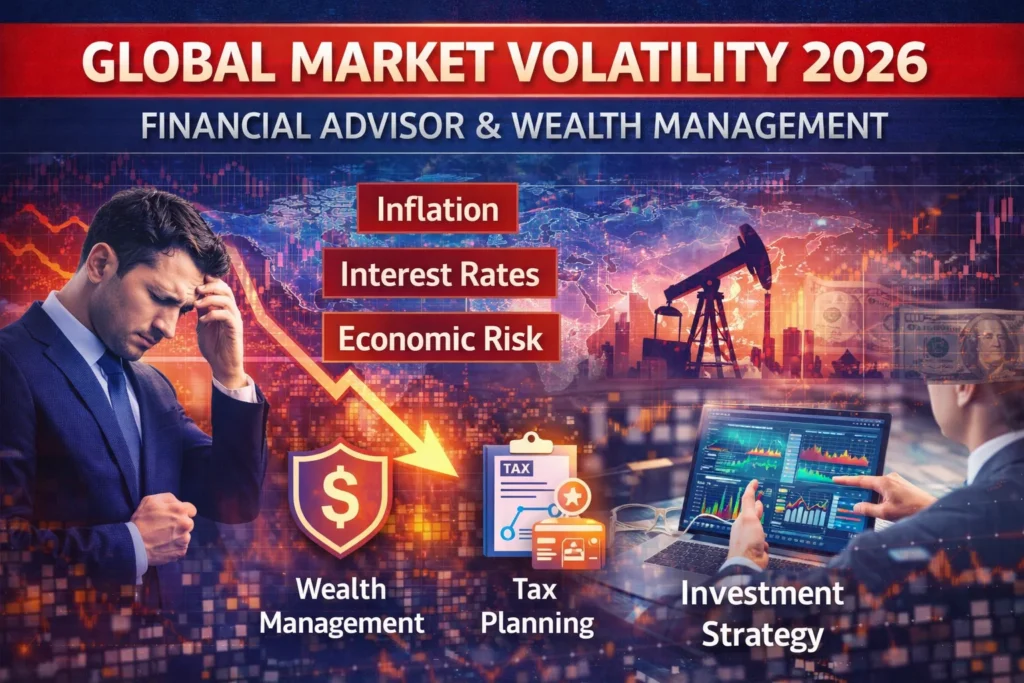
Global Market Volatility in 2026: What Businesses and Investors Must Do to Stay Financially Strong

The global economy in 2026 is going through a period of uncertainty that is affecting businesses, investors, and financial institutions across the world. Rising inflation concerns, changing interest-rate policies, geopolitical conflicts, and rapid technological transformation are creating unpredictable conditions in stock markets and corporate finance. Because of this situation, the role of a financial advisor, financial planner, and professional financial services has become more important than ever. Companies that fail to adapt to these changes often struggle with cash flow, investment losses, and poor financial decisions. On the other hand, organizations that follow proper financial planning, strong portfolio management, and expert wealth management strategies are able to survive and grow even during difficult times. In today’s environment, working with an experienced financial consultant or independent financial advisor is no longer optional — it is a key part of long-term business success. Why Global Markets Are Unstable in 2026 Financial markets around the world are facing pressure from multiple factors at the same time. Interest rates remain high in many countries, which makes borrowing more expensive for companies. At the same time, inflation is still affecting consumer spending, and global trade is slowing down in several regions. Stock markets are also reacting to political tensions, energy price changes, and new financial regulations. Because of these risks, investors must be more careful when making decisions. This is why many people are searching for financial advisors near me or financial consultant near me to get professional guidance before investing. A qualified certified financial planner can help create a strategy that protects investments during market volatility. How Businesses Are Using Financial Advisory Services in 2026 Companies today face complex financial decisions related to funding, expansion, and restructuring. Without proper planning, these decisions can lead to losses or slow growth. Professional financial advisory services help businesses with: Strong financial management allows companies to stay stable even when markets are uncertain. Many organizations now work with a financial advisor or financial planner regularly instead of only during major financial events. Portfolio Management Is Critical in Uncertain Stock Markets Stock markets in 2026 are highly volatile. Prices can change quickly because of global news, interest-rate decisions, or economic reports. Investors who do not have a clear plan often make emotional decisions that result in losses. This is why proper portfolio management is essential. A professional investment advisor helps investors diversify their money into different assets such as equities, bonds, funds, and long-term investments. This reduces risk and improves stability. Good investment management also includes regular review and adjustment of the portfolio based on market conditions. Many successful investors rely on wealth management services to protect their assets during uncertain times. The Growing Importance of Financial Planning and Wealth Management In today’s world, earning money is not enough. Managing money correctly is what determines long-term success. Proper financial planning helps individuals and businesses prepare for future risks. A professional financial planner near me can help with: People with higher income often work with an independent financial advisor to make sure their wealth is protected and growing. Good wealth management focuses on stability, not only profit. Why Retirement Planning and Tax Planning Are More Important Now Another major concern in 2026 is the rising cost of living. People must plan carefully for the future to maintain financial security. Proper retirement planning ensures that you have enough income after you stop working. A professional financial advisor can help design a retirement strategy that includes savings, investments, and income planning. At the same time, better tax planning can reduce financial pressure and increase overall returns. This is why many individuals prefer working with the best financial advisors instead of making decisions without guidance. Role of Financial Institutions and Professional Financial Services Large companies and investors often work with financial institutions and advisory firms to manage complex financial operations. Professional financial services provide support in: In a global economy that changes quickly, expert advice helps businesses avoid mistakes and find new opportunities. Companies that use proper financial planning and professional advisory support usually perform better than those that do not. How Investors Can Stay Safe in Today’s Economy To stay financially strong in 2026, investors should follow a disciplined strategy instead of reacting to market news. Important steps include: These steps help reduce risk and improve financial stability. Conclusion The current global situation shows that financial decisions are becoming more complex every year. Economic uncertainty, market volatility, and rapid technological change are forcing businesses and investors to be more careful. With the help of a professional financial advisor, expert financial planning, strong wealth management, and structured portfolio management, it is possible to stay secure even in unpredictable markets. In 2026, success will belong to those who use smart strategies, professional financial services, and long-term planning to protect and grow their wealth.

Global interest rate
Business Advisory, Business Strategy, Financial Advisory Insights

How Global Interest Rate Shifts Are Changing Investment Strategies in 2026

In 2026 the global financial markets are going through a lot of changes. Central banks are adjusting interest rates to control inflation and help the economy grow. This is happening in the United States, Europe and Asia. Policymakers are being very careful to balance helping the economy recover with keeping inflation under control. These changes are affecting businesses, investors and financial markets around the world. Working with a financial advisor or financial planner is more important now than it has ever been. People and businesses want expert help to protect their investments manage risk and make plans for the term. As the markets change quickly more and more people want financial services, wealth management and help with investing. Why Interest Rate Changes Matter for Investors Interest rates affect every part of the global economy. When interest rates go up it becomes more expensive for businesses and consumers to borrow money. At the time some investments become more attractive while others lose value. For example higher interest rates can affect the stock market, real estate and how much it costs for companies to borrow money. Businesses might put off plans to expand because it costs more to borrow money and investors might move their money to more diverse investments. This is where a financial consultant or investment advisor can really help. These professionals help investors understand what is happening in the market and adjust their plans accordingly. A good financial advisor helps build a portfolio that protects clients from market ups and downs while still trying to grow their investments over time. The Growing Importance of Strategic Financial Planning When the economy is uncertain having a financial plan is key to being financially stable in the long term. Businesses and individuals need a plan to manage risks use their resources wisely and make good financial decisions. Professional financial management often involves diversifying investments assessing risks and planning for the term. Many investors want help from a certified planner who can help them match their financial goals with what is happening in the market. Institutions and corporate clients are also relying more on expert financial advisor services to manage their money make the most of their investments and do better financially. Financial institutions are changing their strategies to respond to what’s happening in the global market. Many are expanding their services to help clients deal with economic challenges and find new opportunities to grow. Portfolio Management in a Volatile Market The financial markets are very unpredictable now. Politics, technology and global economic changes are all affecting how the markets behave. In this kind of environment managing a portfolio effectively is crucial. Having a portfolio helps reduce risk while still trying to get good returns over time. Professional investment management involves balancing types of investments, such as stocks, bonds and alternative investments. With the help of an investment advisor investors can find opportunities while avoiding too much risk. The goal of managing wealth is not just to grow it but to protect it during uncertain times. Long-Term Financial Security and Retirement Planning Another area where expert advice’s really important is planning for retirement. As the economy changes individuals need to rethink their term financial plans to make sure they are stable in the future. Inflation rising living costs and changes in the investment markets mean that planning for retirement is more complicated than ever. A professional financial advisor can help create a plan that includes saving strategies, diverse investments and tax planning. Good tax planning also helps investors get the most out of their money while paying as tax as possible. Why Professional Financial Guidance Is More Important Than Ever The financial world is getting more and more complex. Global markets are connected economic trends change quickly. Investment opportunities are always evolving. For individuals, businesses and institutions working with a trusted consultant or experienced financial planner can provide valuable insights and guidance. Whether it involves managing investments planning for the term or advanced wealth management expert advice helps clients navigate uncertainty and make confident financial decisions. As the global economy keeps changing in 2026 and beyond financial advisors and their services will be essential, for anyone who wants financial stability and growth over time.

Corporate Training
Corporate Training

Corporate Training for Strategic Excellence & Financial Leadership

In today’s fast-paced business world, companies must constantly adapt, innovate, and evolve. One of the most effective ways to achieve sustained performance and competitive advantage is through structured corporate training programs designed to build financial, strategic, and leadership capabilities across organizations. At Synergistic Financial Advisors, we believe that the right training not only strengthens skills but also empowers teams to make smarter financial decisions, improve operational efficiency, and drive long-term growth. Why Corporate Training Matters in Modern Business Corporate environments are becoming increasingly complex. Whether a company is scaling up, restructuring, or navigating market volatility, well-designed corporate training programs ensure that teams are prepared with the knowledge and tools needed to respond effectively. Training is no longer an optional perk — it is a strategic investment that: Today, organizations expect more than theoretical knowledge. They want actionable insights that drive results. That’s where professional training, grounded in real-world financial strategy, becomes transformational. Financial Planning and Advisory Training for Business Leaders Financial literacy and strategic thinking are core competencies for leaders across functions. Executives, finance teams, and department heads benefit greatly from training that deepens their understanding of financial planning, forecasting, and performance analysis. Our training programs cover essential topics such as: Developing these skills helps teams think beyond spreadsheets, enabling them to anticipate challenges and contribute meaningfully to corporate goals. Training for Financial Advisors and Consultants Professionals working in advisory roles — such as financial advisor, financial consultant, or investment advisor — must stay ahead of evolving market trends, regulations, and client expectations. Our corporate programs tailored for advisory teams include: By investing in specialized training for advisory professionals, firms enhance credibility, build trust, and deliver higher value to clients. Building Strategic Financial Teams Organizational success increasingly depends on cross-functional financial understanding. Whether it’s sales forecasting, budgeting, or financial risk communication, non-financial professionals benefit from structured learning that bridges the gap between operational expertise and financial literacy. For example: Such multidisciplinary training fosters alignment, improves collaboration, and supports better decision-making at all levels. Customized Corporate Training That Delivers Results Every organization has unique challenges and goals. Off-the-shelf training rarely delivers strategic impact. That’s why our corporate training offerings are fully customized to match: We begin with a diagnostic phase — understanding organizational needs, current capabilities, and desired outcomes. Then, we design targeted modules that support measurable change. Why Professional Training Enhances Financial Services Delivery When teams are trained in financial concepts, their ability to collaborate with clients and internal stakeholders improves significantly. For firms offering financial services, such as wealth management or investment management, having well-trained professionals helps: Corporate training solidifies not just individual skills, but the firm’s overall market credibility. Aligning Training with Broader Business Strategy Corporate Training should never be isolated from larger strategic objectives. At its best, it aligns with: This ensures that training outcomes are not just theoretical but actively support business success. Final Thought: Training as a Strategic Investment Companies that prioritize education and skill enhancement gain a competitive edge. Whether you are a mid-sized enterprise, a financial institution, or a professional services firm, structured corporate training programs designed around financial acumen bolster resilience, innovation, and long-term value creation. At its core, effective corporate training empowers people — and empowered people drive results.

Best Financial Advisor
Business Advisory, Financial Advisor

How to Choose the Best Financial Advisor for Long-Term Financial Success

Choosing the best financial advisor is one of the most important financial decisions an individual or business can make. In today’s complex financial environment, success is no longer about making isolated decisions—it’s about having a clear strategy supported by professional insight, discipline, and long-term planning. A reliable financial advisor does more than offer advice. They act as a strategic partner who helps align financial decisions with long-term goals, risk tolerance, and changing market conditions. What Defines the Best Financial Advisor The best financial advisors focus on understanding your complete financial picture before recommending solutions. This includes income structures, assets, liabilities, growth objectives, and risk exposure. Whether you are an individual seeking stability or a business aiming for sustainable growth, a professional financial consultant provides clarity by transforming complex financial data into actionable strategies. Many people search online for financial advisors near me, but proximity alone does not define quality. Experience, independence, and a structured advisory approach are far more important. Working with an independent financial advisor ensures objective guidance without product-driven bias. Similarly, a fiduciary financial advisor is legally obligated to act in the client’s best interest, offering transparency and trust. Comprehensive Financial Planning That Builds Confidence One of the core responsibilities of the best financial advisor is delivering structured financial planning. A strong plan creates a roadmap that connects current resources with future goals. Professional financial planning addresses: Clients often seek a financial planner near me or a certified financial planner to ensure their planning is handled with professionalism and accountability. Certification reflects adherence to ethical standards and industry best practices. Through disciplined planning, financial decisions become proactive rather than reactive. Wealth Management and Portfolio Management Services Effective wealth management is not about chasing returns—it is about preserving capital while achieving sustainable growth. The best financial advisor designs strategies that balance opportunity and risk over time. Professional portfolio management ensures investments are diversified, monitored, and adjusted based on market conditions and personal goals. This structured approach reduces emotional decision-making during volatile periods. With expert investment management, portfolios are aligned with long-term objectives rather than short-term market noise. A qualified investment advisor ensures each investment decision supports the broader financial strategy. Investment Advisory and Retirement Planning Strategic investment advisory services focus on aligning investment decisions with financial goals, time horizons, and risk tolerance. Rather than offering generic solutions, a professional investment advisor tailors strategies to individual needs. In addition, retirement planning plays a critical role in long-term financial security. Starting early allows flexibility, while regular reviews ensure plans adapt to life changes, inflation, and evolving financial conditions. The best financial advisor integrates retirement strategies within the broader framework of financial management, ensuring consistency and sustainability. Serving Individuals, Businesses, and Financial Institutions A trusted financial services provider supports a wide range of clients, including individuals, entrepreneurs, and financial institutions. Businesses benefit from advisory support in areas such as capital planning, financial structuring, and long-term growth strategy. Professional financial management helps organizations optimize resources, manage risk, and improve decision-making across all levels. By combining financial planning, wealth management, and investment management, advisory services deliver integrated solutions rather than fragmented advice. Why Choosing the Right Financial Advisor Matters The difference between average results and long-term success often comes down to guidance. The best financial advisor brings discipline, clarity, and strategic thinking to every financial decision. Rather than focusing solely on short-term gains, professional advisory services prioritize stability, growth, and resilience. With the right advisor, financial goals become achievable, measurable, and sustainable. In a world of constant financial change, partnering with a trusted financial consultant is not a luxury—it is a strategic necessity.

Financial Advisor
Business Advisory, Financial Advisor

Why Smart Financial Decisions Start With the Right Advisor, Not the Right Product

In today’s fast-moving economic environment, making the right financial decisions has become more challenging than ever. Rising inflation, global uncertainty, regulatory changes, and volatile markets have made it difficult for individuals and businesses to rely on instinct alone. This is why working with a trusted financial advisor has become a strategic necessity rather than a discretionary choice. Modern financial success is no longer about isolated decisions. It is about structure, discipline, and long-term alignment. The Shift From Products to Financial Planning For many years, financial decision-making revolved around products—investment schemes, savings plans, or short-term opportunities. Today, that approach is proving insufficient. Sustainable outcomes require structured financial planning that connects income, assets, liabilities, and future goals into a single, coherent strategy. A professional financial planner focuses on understanding the full financial picture rather than promoting individual solutions. This approach helps individuals and organizations move away from reactive decisions toward intentional, goal-driven strategies. As more people search for financial advisors near me, the emphasis is shifting toward advisors who offer clarity, transparency, and long-term thinking—not just convenience. Why Independent Advice Matters More Than Ever One of the most critical factors in effective advisory relationships is independence. An independent financial advisor operates without product bias, ensuring recommendations are based solely on client needs and objectives. This independence becomes even more important in complex financial environments where conflicts of interest can undermine long-term outcomes. Clients today increasingly seek advisors who prioritize strategy over sales and guidance over transactions. Working with a fiduciary financial advisor further strengthens this trust. Fiduciary responsibility ensures that advice is aligned with the client’s best interest at all times, reinforcing transparency and accountability. Wealth Management Is About Balance, Not Just Growth Many people associate wealth management with aggressive investment strategies. In reality, sustainable wealth is built through balance—growth, preservation, and risk control. True wealth management considers both opportunities and vulnerabilities. Professional investment management focuses on aligning capital with long-term objectives rather than short-term market movements. A skilled investment advisor helps structure portfolios that can withstand volatility while remaining positioned for growth. Through disciplined portfolio management, investors benefit from diversification, regular review, and strategic oversight—key elements of long-term financial resilience. The Role of Financial Services in Long-Term Stability Modern financial services are no longer fragmented. They integrate advisory insight, planning discipline, and execution under a unified framework. This integrated approach allows individuals, businesses, and even financial institutions to operate with greater clarity and confidence. Effective financial management helps organizations allocate resources efficiently, manage risk proactively, and adapt to changing market conditions without compromising long-term goals. Rather than reacting to uncertainty, integrated financial services enable informed, forward-looking decision-making. Retirement Planning Is a Process, Not a Milestone One of the most underestimated areas of finance is retirement planning. Many individuals delay planning, assuming it can be addressed later. In reality, the most successful retirement outcomes are the result of early action and continuous review. Retirement planning today must account for longevity, inflation, healthcare costs, and lifestyle expectations. A trusted financial advisor helps structure retirement strategies that remain flexible as personal and professional circumstances evolve. When supported by consistent financial planning, retirement becomes a well-managed transition rather than a financial shock. Why Choosing the Right Advisor Makes the Difference With so many options available, selecting the right financial consultant is about more than credentials or proximity. It is about alignment, trust, and long-term perspective. Individuals seeking the best financial advisors increasingly prioritize professionalism, fiduciary standards, and strategic capability. These qualities define advisory relationships that deliver value not just today, but over decades. Final Thoughts In an era defined by uncertainty, structured guidance has become a competitive advantage. From financial planning and wealth management to investment management and retirement planning, professional advice transforms complexity into clarity. The right advisor does not simply manage money—they help shape confident financial futures.

Scroll to Top