Business Strategy

Global interest rate
Business Advisory, Business Strategy, Financial Advisory Insights

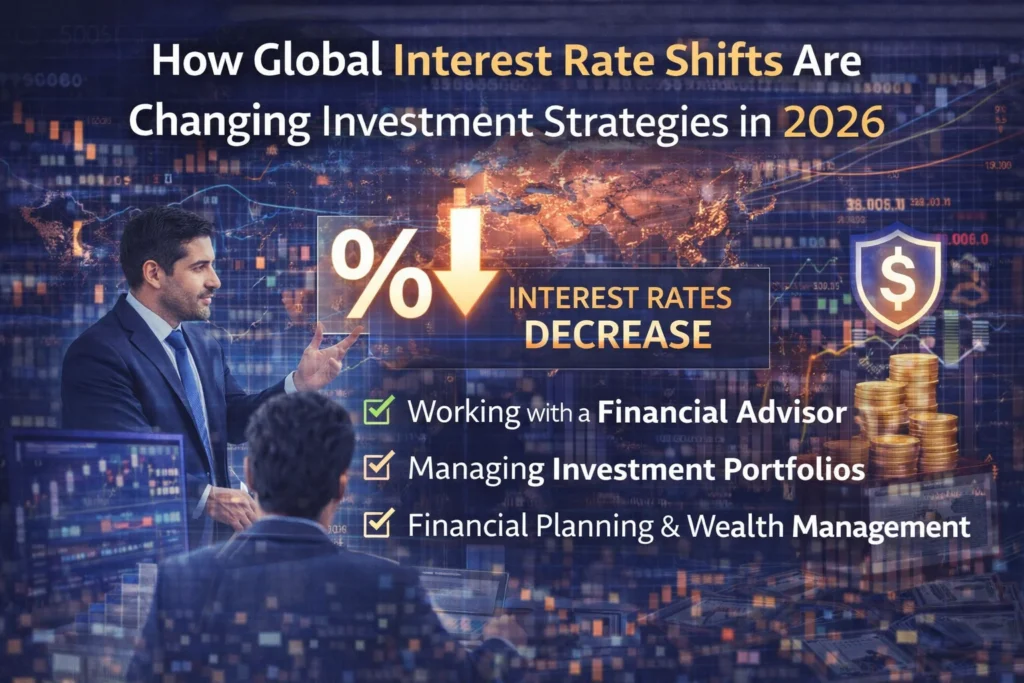
How Global Interest Rate Shifts Are Changing Investment Strategies in 2026

In 2026 the global financial markets are going through a lot of changes. Central banks are adjusting interest rates to control inflation and help the economy grow. This is happening in the United States, Europe and Asia. Policymakers are being very careful to balance helping the economy recover with keeping inflation under control. These changes are affecting businesses, investors and financial markets around the world. Working with a financial advisor or financial planner is more important now than it has ever been. People and businesses want expert help to protect their investments manage risk and make plans for the term. As the markets change quickly more and more people want financial services, wealth management and help with investing. Why Interest Rate Changes Matter for Investors Interest rates affect every part of the global economy. When interest rates go up it becomes more expensive for businesses and consumers to borrow money. At the time some investments become more attractive while others lose value. For example higher interest rates can affect the stock market, real estate and how much it costs for companies to borrow money. Businesses might put off plans to expand because it costs more to borrow money and investors might move their money to more diverse investments. This is where a financial consultant or investment advisor can really help. These professionals help investors understand what is happening in the market and adjust their plans accordingly. A good financial advisor helps build a portfolio that protects clients from market ups and downs while still trying to grow their investments over time. The Growing Importance of Strategic Financial Planning When the economy is uncertain having a financial plan is key to being financially stable in the long term. Businesses and individuals need a plan to manage risks use their resources wisely and make good financial decisions. Professional financial management often involves diversifying investments assessing risks and planning for the term. Many investors want help from a certified planner who can help them match their financial goals with what is happening in the market. Institutions and corporate clients are also relying more on expert financial advisor services to manage their money make the most of their investments and do better financially. Financial institutions are changing their strategies to respond to what’s happening in the global market. Many are expanding their services to help clients deal with economic challenges and find new opportunities to grow. Portfolio Management in a Volatile Market The financial markets are very unpredictable now. Politics, technology and global economic changes are all affecting how the markets behave. In this kind of environment managing a portfolio effectively is crucial. Having a portfolio helps reduce risk while still trying to get good returns over time. Professional investment management involves balancing types of investments, such as stocks, bonds and alternative investments. With the help of an investment advisor investors can find opportunities while avoiding too much risk. The goal of managing wealth is not just to grow it but to protect it during uncertain times. Long-Term Financial Security and Retirement Planning Another area where expert advice’s really important is planning for retirement. As the economy changes individuals need to rethink their term financial plans to make sure they are stable in the future. Inflation rising living costs and changes in the investment markets mean that planning for retirement is more complicated than ever. A professional financial advisor can help create a plan that includes saving strategies, diverse investments and tax planning. Good tax planning also helps investors get the most out of their money while paying as tax as possible. Why Professional Financial Guidance Is More Important Than Ever The financial world is getting more and more complex. Global markets are connected economic trends change quickly. Investment opportunities are always evolving. For individuals, businesses and institutions working with a trusted consultant or experienced financial planner can provide valuable insights and guidance. Whether it involves managing investments planning for the term or advanced wealth management expert advice helps clients navigate uncertainty and make confident financial decisions. As the global economy keeps changing in 2026 and beyond financial advisors and their services will be essential, for anyone who wants financial stability and growth over time.

Businesses Are Rethinking Financial Strategy
Business & Investment Strategy, Business Advisory, Business Strategy

Why Businesses Are Rethinking Financial Strategy in 2026

The global business environment is changing faster than it has in years. Inflation is easing in some regions, interest rates remain uncertain in others, and capital markets are becoming more selective. For many companies, this has triggered a deeper rethink of how financial decisions are made—not just for growth, but for stability. In 2026, financial strategy is no longer limited to raising funds or managing cash flow. Businesses are now focusing on resilience, smarter capital allocation, and long-term value creation. A Shift From Growth-at-All-Costs to Sustainable Planning Over the past few years, many companies expanded aggressively. Today, boards and management teams are far more cautious. The focus has shifted toward projects that deliver predictable returns and protect downside risk. This is where structured corporate finance planning becomes essential. Companies are evaluating debt structures, refinancing existing obligations, and reassessing capital structures to ensure they can withstand market volatility. Businesses that actively review their funding mix are finding it easier to manage costs and maintain flexibility. Portfolio Discipline Is Back in Focus Another major trend is the renewed emphasis on disciplined investing. Investors and corporates alike are prioritizing risk-adjusted returns rather than speculative gains. This has increased demand for professional portfolio management strategies that balance growth opportunities with capital preservation. Rather than chasing short-term market movements, businesses are aligning investments with long-term objectives—whether that’s geographic expansion, sector diversification, or income stability. Advisory Support Is Becoming a Strategic Necessity As regulations evolve and markets become more complex, decision-makers are seeking deeper insights before acting. Today’s advisory services go beyond basic consulting. They support feasibility analysis, valuation, restructuring, and strategic planning—especially for companies entering new markets or restructuring existing operations. In many cases, early advisory involvement helps businesses avoid costly mistakes later. It also improves lender confidence and investor transparency. Building Financial Capability From Within One often overlooked trend is the growing importance of internal financial skills. Companies are investing in corporate training to strengthen their teams’ understanding of financial modeling, risk assessment, and performance monitoring. This internal capability reduces dependency on external support and improves day-to-day decision-making. Well-trained teams respond faster to market changes and manage financial risks more effectively. What This Means for Businesses Today The companies performing best right now are not necessarily the biggest or the fastest growing. They are the ones that: Staying informed through reliable financial insights and analysis is critical. Following industry updates and expert commentary through platforms like our blog helps businesses stay aligned with emerging trends and practical strategies. Final Thought 2026 is shaping up to be a year where clarity and discipline matter more than ambition alone. Businesses that treat financial strategy as an ongoing process—not a one-time exercise—are better positioned to grow, adapt, and succeed in an increasingly complex global economy.

Business & Financial Strategy
Business & Investment Strategy, Business Strategy, Financial Advisory Insights, Financial Insights

Why 2026 Is Becoming a Turning Point for Business and Financial Strategy

The year 2026 is becoming a deal for business and financial strategy. This is the time when companies will have to make some changes. Business and financial strategy will be very important in 2026. The way companies do business and financial strategy will be different in 2026. Business and financial strategy are. 2026 Is the year when we will see a lot of new things happening. The business and financial strategy that companies use now will not be the same in 2026. So 2026 is a year, for business and financial strategy and companies need to be ready. Smarter Financial Decisions Are Driving Business Confidence The world of business is changing fast. Companies did not think it would happen quickly. The global business environment is still changing fast. Interest rates are not certain people with money are being more careful about where they put it. Investors are asking the global business environment a lot of tough questions. By the year 2026 companies that are part of the business environment and make decisions based on guesses or old ways of handling money are having a hard time competing with other companies, in the global business environment. What is becoming clear is this: a strong financial strategy’s no longer something you can do without. A strong financial strategy is the foundation for a company to survive and for a company to grow. A strong financial strategy is very important. Making money choices is helping businesses feel more confident. Businesses are able to make decisions about money and that is making them feel better, about the future. This is because smarter financial decisions are driving business confidence. When businesses make choices with their money they are able to do more things and grow. Smarter financial decisions are really helping businesses to feel confident. That is a good thing. One of the changes we are seeing is how companies make decisions about money. Companies are not just doing what the market tells them to do. They are taking an approach to making financial decisions. They are focusing on being sustainable and using their money wisely. Companies are also thinking about how they can create value that will last for a time. Financial decision-making is really important to companies. They are doing it in a smarter way. Companies are looking at things, like sustainability. Making sure they have enough money to do what they want to do. This is where you need help from people who’re good at corporate finance. They can do things like look at whether a company should buy another company or join with them and help with debt problems and making sure the company has a plan for money. Companies are getting help, from people who know about money to make sure they are safe and can grow. They want to use finance to reduce risk and find new ways for the company to grow. Investors Are Prioritizing Stability Over Speculation People who invest their money are now focusing on things that’re safe and steady. They do not want to take a lot of risks and guess what will happen in the future. Investors are choosing stability over speculation because it is a secure way to handle their money. This means that investors are looking for investments that’re reliable and will not suddenly lose value. Investors want to make sure their money is safe and will grow slowly over time than trying to make a quick profit through speculation. Investors, like this approach because it helps them avoid losses. Stability is what investors are looking for, not speculation. Markets are really unpredictable these days. This has changed the way people invest their money. Of trying to make a lot of money quickly many people and companies are being more careful with their investments. They are looking for ways to invest that’re smart and safe. This means they want to balance the risk of losing money with the possibility of making money. People are looking for disciplined investment strategies. Disciplined investment strategies are what many individuals and institutions are focusing on. These strategies balance. Return for the investor, which is what people want from their investments a good return, without too much risk. People really want to have control over their money. So the demand for portfolio management is getting bigger. Investors need to see things like how their money is being divided among different assets and they want to know what is going on with their investments. They also want to make sure that the strategies, for their portfolio management are going to help them reach their term financial goals. This way of managing money is really helping people during times. The portfolio management is proving to be very strong when thingsre not certain. Advisory Services Are Becoming Strategic, Not Reactive Advisory services are becoming strategic they are not about being reactive. These days advisory services are all about looking and planning for the future. Advisory services are changing the way they work. They are becoming more proactive. This means advisory services are taking charge and advisory services are coming up with ideas. The old way of doing things is no longer working for services. Advisory services used to be about fixing problems after they happened.. Now advisory services are about preventing problems from happening in the first place. This is a change for advisory services. Advisory services are really becoming strategic. They are thinking about what might happen next and advisory services are getting ready, for it. In the past companies did not use support very much. They only got help from advisors when something big was happening like they were trying to raise money or change the way the company was set up. Now businesses are asking advisors for help a lot sooner when they are still making decisions about what to do. This is happening because businesses want to make sure they are doing the thing and they want to get advice from people who know what

blank
Business Strategy, Financial Advisory Insights, Financial Strategy

How Businesses Are Rethinking Financial Strategy in a Volatile Global Economy

Over the past year, businesses across the globe have been operating in an environment shaped by rising interest rates, shifting investor confidence, and tighter capital markets. These conditions have pushed companies to rethink how they manage finances, structure investments, and plan for sustainable growth. Rather than relying on short-term decisions, organizations are increasingly focusing on structured financial strategies that support long-term stability. Financial Planning Is No Longer Just About Numbers Today, financial planning goes far beyond balance sheets and forecasts. Companies are looking closely at capital efficiency, risk exposure, and strategic flexibility. This shift has increased demand for expert corporate finance support, especially for businesses exploring mergers, acquisitions, debt restructuring, or expansion into new markets. With global deal activity showing signs of recovery, decision-makers are prioritizing proper valuation, due diligence, and regulatory alignment before executing transactions. Investment Decisions Are Becoming More Disciplined Market volatility has made investors more cautious. Instead of chasing quick returns, individuals and institutions are focusing on disciplined investment frameworks designed to preserve and grow wealth over time. This trend has strengthened the importance of professional portfolio management, where asset allocation, risk balancing, and performance monitoring play a critical role. Businesses and high-net-worth individuals are now paying closer attention to diversification and long-term financial goals rather than short-term market noise. Advisory Support Is Moving to the Center of Strategy As regulatory requirements and market complexities increase, companies are seeking reliable guidance to support strategic decision-making. Financial leaders now rely on advisory services not only during crises, but also during planning phases such as business expansion, restructuring, or new project evaluation. Effective advisory support helps organizations assess feasibility, optimize capital structures, and align financial plans with operational goals. Building Internal Capability Through Training Alongside external expertise, businesses are also investing in strengthening their internal teams. Financial literacy, analytical skills, and strategic thinking are becoming essential competencies across departments. This has led to increased interest in structured corporate training programs that help professionals understand financial data, manage performance, and contribute more effectively to decision-making. Companies that invest in skill development are better positioned to execute strategies successfully. What This Means for Businesses Going Forward The global financial environment may remain uncertain, but businesses that adopt a structured and informed approach are better equipped to manage risk and identify opportunities. A combination of strong financial planning, disciplined investment management, reliable advisory support, and capable internal teams creates a solid foundation for sustainable growth. As markets evolve, staying informed and proactive will continue to be a key differentiator. For more insights on financial strategy, market trends, and professional perspectives, explore the latest updates on our business and financial insights blog.

Financial Trends & Market Updates
Business & Investment Strategy, Business Strategy, Corporate Advisory

Latest Financial Trends & Market Updates Impacting Business Strategy in 2026

Global financial markets and business strategy continue to shift rapidly as we move deeper into 2026. Recent developments across banking, artificial intelligence, investment trends, and corporate deal-making are influencing how companies plan their financial future. Here’s what business leaders, investors, and financial professionals should know right now. 📌 Major Leadership and Banking Shifts Standard Chartered CFO Resigns, Shares DropStandard Chartered’s Chief Financial Officer stepped down unexpectedly this week, triggering a sharp fall in the bank’s share price. The departure ahead of annual results has sparked market speculation about future leadership and strategy in one of the world’s key international banks. Such shifts in senior leadership can affect investor confidence, financial planning, and capital strategy — areas where reliable advisory services and strategic guidance help companies stay grounded amid uncertainty. 📈 Investment Banking and M&A Momentum Wells Fargo Expands Deal-Making CapabilitiesWells Fargo has launched a significant hiring push for senior dealmakers to boost its presence in mergers and acquisitions. This move has already lifted its ranking in global M&A league tables and reflects a broader industry focus on transaction advisory growth and competitive capital markets positioning. M&A activity remains one of the top strategic priorities for many firms, and having strong corporate finance expertise can make the difference in executing complex deals. 📊 Financial Services Transformation AI and Cloud Adoption Reshaping Financial InfrastructureAcross the financial sector, cloud-native systems and real-time data capabilities are transforming how institutions operate. From fraud detection to algorithmic trading, cloud technologies are critical to modern competitive strategy in banking and finance. As digital tools become essential for effective risk management and client engagement, businesses that integrate portfolio management and data-driven decision support can better respond to market swings and investment trends. 📉 Mixed Market Signals and Risk Focus Recent sentiment data shows mixed signals from markets, with some rallies in stocks following rallies but continued volatility in crypto and commodity sectors. These mixed trends highlight the need for robust financial planning rather than reactionary moves. Professionals who combine forward-looking strategy with strong financial analysis frameworks are better equipped to help businesses navigate uncertainty. 🔍 Sector Innovation and Fintech Trends Fintech and Embedded Finance Lead InnovationFintech trends continue to accelerate in 2026, with deep integration of artificial intelligence, automated decision-making, and digital identity solutions. Autonomous finance systems are empowering faster risk scoring, fraud detection, and tailored customer experiences — reshaping the financial services landscape. For companies and investors, understanding these shifts is essential. Wealth creation and financial planning today require agility and digital insight — whether in advisory functions or investment strategy. 💡 What This Means for Businesses These news trends collectively point toward a few key business imperatives in 2026: In this environment, companies that align financial strategy with operational agility are more likely to seize opportunities and manage risks successfully. 🔗 Keep Learning For more insights into how financial market trends tie back to practical business decisions, visit our SFA blog, where we break down complex developments into actionable perspectives:👉Latest Financial Insights & Trends

Business Strategy
Business Strategy, Financial Advisory Insights, Financial Insights

How Today’s Global Financial Trends Are Impacting Business Strategy and Advisory in 2026

Financial markets and corporate activity continue to evolve rapidly in early 2026, presenting opportunities and challenges for businesses, investors, and professionals alike. From strong deal-making in financial services to strategic moves by global banks, recent developments highlight the ongoing importance of informed financial planning and advisory. 1. Financial Services M&A Deal Value Soars So far in 2025, the global financial services sector saw a significant increase in deal value, with total disclosed transaction value rising by nearly 49% compared to the previous year. There were 93 deals above $1 billion, representing a large portion of total deal value, even as broader market conditions remained challenging. This surge in high-value deals underscores the continued momentum in strategic transactions and corporate consolidation. For businesses considering mergers, acquisitions, or divestitures, having strong corporate finance expertise is crucial to navigate valuations, negotiations, and integration planning. 2. Banks Are Posting Profits and Shifting Strategies Major financial institutions such as Barclays have reported higher profits and adjusted strategic priorities, including leveraging technology like artificial intelligence to improve efficiency and returns. At the same time, large banks are redefining their focus areas to capture market share in both traditional banking and wealth management. These developments influence how corporations plan capital allocation and investment strategies, areas where professional advisory services can provide perspective on risk, cost efficiency, and long-term structuring. 3. Big Deals Reflect Strategic Investment Shifts One of the most interesting stories in the market today comes from NatWest’s £2.7 billion acquisition of Evelyn Partners — one of the UK’s largest wealth managers. This move highlights a growing focus on wealth and private client services. For businesses and individuals looking to preserve and grow capital, structured portfolio management becomes vital, especially when global economic signals are mixed and investor sentiment fluctuates. 4. Strategic Investment Tools Expand with Tech Bonds Another noteworthy development is the issuance of a rare 100-year sterling bond by a major technology company, reflecting an appetite for long-term investment instruments in global capital markets. Such long-term securities can influence asset allocation strategies and institutional investment patterns. For organizations planning long-term growth or adjusting their capital mix, understanding these instruments and trends plays into how advisory work and financial analysis support practical planning. 5. Finance Teams Prioritize Efficiency and Cost Control A recent survey of finance leaders from the banking and financial services sector shows that cost control and operational efficiency remain top priorities in 2026. This focus is reflected in how companies approach budgeting, operational restructuring, and financial forecasting. Robust corporate training programs in finance and analysis help internal teams adapt to these priorities, improving performance and supporting strategy execution. What These Trends Mean for Your Business These global financial updates are not just headlines — they reflect deeper shifts in how companies plan and execute financial strategy. Whether your organization is preparing for investment, restructuring debt, expanding into new markets, or optimizing internal processes, the evolving landscape reinforces the need for integrated, forward-looking financial support. Staying informed and proactive in financial decision-making allows businesses to turn uncertainty into opportunity. For ongoing insights and updates on financial trends and strategic planning, check out our latest articles on the SFA Blog.

financial services
Business Advisory, Business Strategy, Corporate Advisory, Financial Advisory Insights, Financial Insights

How Today’s Financial News Is Shaping Advisory, Investment, and Corporate Planning in 2026

Today’s financial landscape is moving quickly, and understanding current market trends can help businesses make better decisions about strategy, risk, and growth. Across global markets this week, a few important developments are worth noting for companies looking to stay ahead. 📊 Major Global Financial Headlines European Central Bank Highlights the Euro’s Growing Role:Europe’s financial system is preparing for a larger global role as the euro gains traction amid the U.S. dollar’s weakening dominance. Officials are exploring ways to strengthen tools like international repos and swaps to stabilize markets if needed. This trend has implications for global investment strategies and currency risk management. NatWest’s £2.7B Acquisition Signals Wealth Management Focus:NatWest’s recent acquisition of Evelyn Partners — a major wealth management and private banking firm — signals how financial institutions are placing greater emphasis on fee-based services and asset management amid margin pressures. Moves like these show why companies are increasingly valuing integrated portfolio management and advisory support. Japan Market Surges on Fiscal Confidence:Japan’s election win and a large fiscal stimulus plan triggered a record high in the Nikkei and a stronger yen, showing how political shifts influence investor sentiment and international portfolio positioning. 📌 Trend Insights Financial Leaders Should Note Strategic Role of Finance Leaders Is ExpandingRecent industry research shows that more than half of finance leaders now shape enterprise strategy amid global challenges — including cost optimization and adoption of technologies like AI and cloud tools. This reinforces why businesses need coherent advisory services that go beyond basic reporting to support strategic decisions. Private Equity Continues to Drive GrowthPrivate equity markets are expected to remain active, supported by structural reforms and improved liquidity. Investors are balancing traditional opportunities with new technology-related risks, an environment where disciplined financial analysis and advisory expertise becomes crucial for strong outcomes. M&A Activity Reflects Tech and Scale PrioritiesDealmakers are increasingly focused on scale and cost efficiency, often turning to technology-driven transformation deals. This trend underscores why strategic corporate finance guidance is essential before closing major transactions. Fintech and Embedded Finance Evolve FastNew financial technology developments — from AI in banking operations to partnerships that embed financial products into everyday apps — are reshaping how money moves and how people interact with financial services. These shifts present both opportunities and risks for businesses across sectors. 🧠 What This Means for Your Business In uncertain markets, companies that stay informed about global trends can better position themselves for success. Here’s how these developments relate to your planning: By understanding both broad economic shifts and specific sector trends, businesses can make more informed choices about growth, financing, and operational strategy. 📊 Staying Ahead Staying current with market developments isn’t just about reacting to headlines — it’s about integrating financial trends into your planning and advisory strategies. For more insights, analysis, and updates that help with capital structure decisions, risk management, and growth planning, continue exploring our regularly updated posts on the SFA Blog

financial advisory services
Business Advisory, Business Strategy, Corporate Advisory, Financial Advisory Insights, Financial Insights

Why Integrated Financial Advisory Services Are Becoming Critical for Businesses in 2026

Over the past year, businesses across emerging and developed markets have been operating in a much tougher environment. Higher interest rates, tighter liquidity, regulatory pressure, and shifting investor expectations have made financial decision-making more complex than ever. What’s changing is not just the speed of business, but the depth of financial planning required to stay competitive. This is where integrated financial advisory services are starting to matter more than isolated solutions. A Shift from Standalone Advice to Integrated Financial Support Earlier, companies often relied on separate consultants for financing, valuation, or operational advice. Today, that fragmented approach creates delays, higher risk, and inconsistent decision-making. More businesses are now looking for advisory firms that can support them across: Firms offering Corporate Finance advisory are increasingly involved beyond transactions, helping businesses evaluate mergers, debt structures, and funding strategies in line with their long-term objectives.(Explore SFA’s approach to Corporate Finance services) Wealth Preservation Is No Longer Passive Another major trend is the growing focus on active wealth management. Market volatility has pushed individuals, family offices, and institutional investors to rethink how portfolios are structured and monitored. Instead of reactive investing, there is a strong demand for: This is why professional Portfolio Management services are gaining traction, especially among clients seeking long-term stability rather than short-term returns.(Learn more about Portfolio Management at SFA: https://sfaresearch.com/portfolio-management/) Advisory Services Are Becoming Strategy-Driven Modern advisory is no longer limited to reports and spreadsheets. Businesses now expect advisors to be involved in decision execution, not just planning. Across sectors, companies are using Advisory Services for: This hands-on approach helps management teams make informed decisions during critical phases of growth or restructuring.(See how SFA delivers Advisory Services: https://sfaresearch.com/advisory-services/) Corporate Training Is Supporting Financial Performance One overlooked trend is the role of corporate training in financial outcomes. Many organizations are realizing that strategy fails when teams lack the skills to execute it. As a result, companies are investing in Corporate Training programs that focus on: Well-designed training programs directly impact productivity, cost control, and long-term profitability.(Discover SFA’s Corporate Training programs: https://sfaresearch.com/corporate-training/) What This Means for Businesses Going Forward The common theme across all these developments is integration. Businesses are no longer looking for advisors who operate in silos. They want partners who understand the full financial picture and can align strategy, execution, and people. Firms that combine corporate finance, advisory, portfolio management, and training under one structure are better positioned to support clients in uncertain markets. For ongoing insights on financial strategy, advisory trends, and market developments, visit the SFA Blog

Scroll to Top